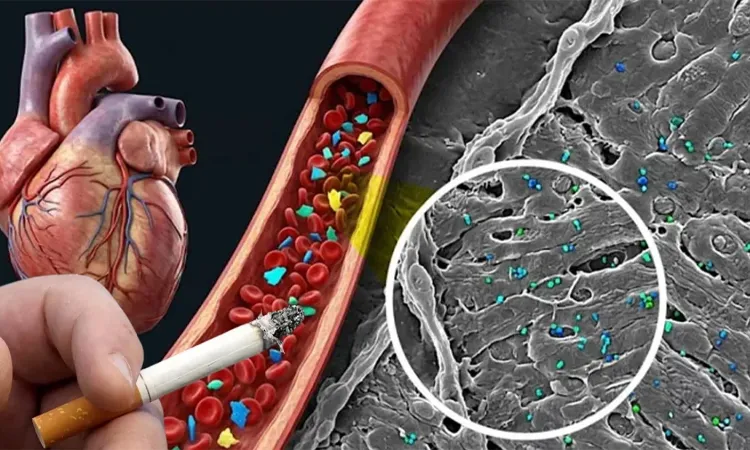
A new Italian study has found a strong association between micro- and nanoplastics in coronary blood and heart disease particularly heart attacks. The researchers also found that smoking and long-term exposure to air pollution were linked to a higher likelihood of detecting these plastic particles in the blood.
The study published in the European Heart Journal on July 14, 2026, involved 61 patients undergoing coronary angiography. Micro- and nanoplastics were detected in 84.2% of patients who had suffered an ST-elevation heart attack compared with 40% of those with chronic coronary disease and 31.8% of people with normal coronary arteries.
Smoking was the strongest independent predictor of micro- and nanoplastic detection. Smokers were about 5.7 times more likely to have detectable particles after adjustment for other factors. The study also found a higher prevalence among people exposed to PM2.5 air pollution. All participants who both smoked and had long-term exposure to higher PM2.5 levels had detectable particles.
Researchers suggest that smoking and polluted air may help plastic particles enter the bloodstream through the lungs. However the study does not prove that microplastics cause heart attacks.
The researchers stressed that the study was small and observational. Larger studies are needed to determine how these particles enter the body and whether they directly contribute to cardiovascular disease.