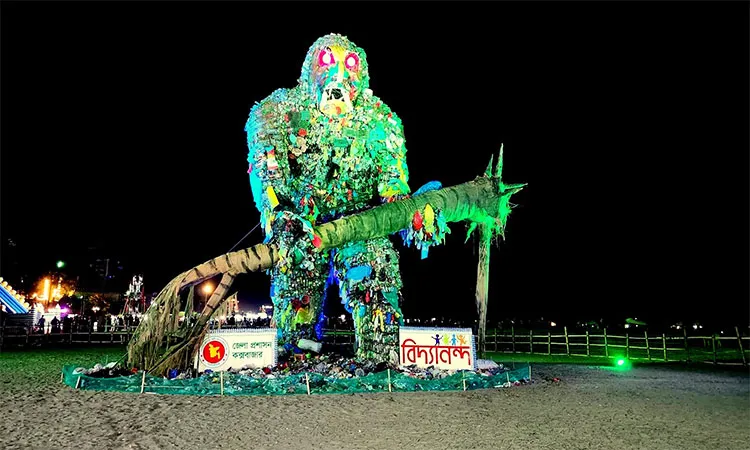
Visitors taking a stroll along Cox's Bazar beach this tourist season are bumping into a terrifying new sight with a 50-foot-tall "plastic monster" looming over the shoreline.
Crafted from roughly five metric tons of synthetic waste gathered from Inani, Teknaf and St. Martin’s Island, the 5-ton sculpture sits right between Sugandha and Seagull points. It was built over 20 days by young artists from Dhaka University's Faculty of Fine Arts in a joint initiative with the Bidyanondo Foundation and the local administration.
The terrifying artwork is a wake-up call about how our everyday single-use plastics like water bottles, chip packets and polythene are wrecking nature. One of the monster's hands is shown uprooting a tree, symbolizing how discarded plastic silently destroys our oxygen supply and greenery.

Environmental experts warn that Cox's Bazar the world’s longest natural sea beach is suffocating under plastic debris. Beyond careless tourists leaving trash on the sand also illegal shops setting up on the beach dunes are a major part of the problem. Advocates are calling for regulated shopping zones, trash bins, regular waste collection and strict penalties for violators.
"Microplastics are entering marine life and fish, eventually making their way into our food chain" experts cautioned with noting that plastic pollution feeds global climate change and threatens future generations.
Inaugurating the sculpture the Cox’s Bazar Deputy Commissioner M. A. Mannan called plastic pollution a monstrous crisis for our environment and promised strict enforcement against beach littering. Department of Environment Deputy Director Khandaker Mahmud Pasha added that while sustainable waste management and recycling are priorities also personal accountability from tourists is the real key to keeping our beaches clean.