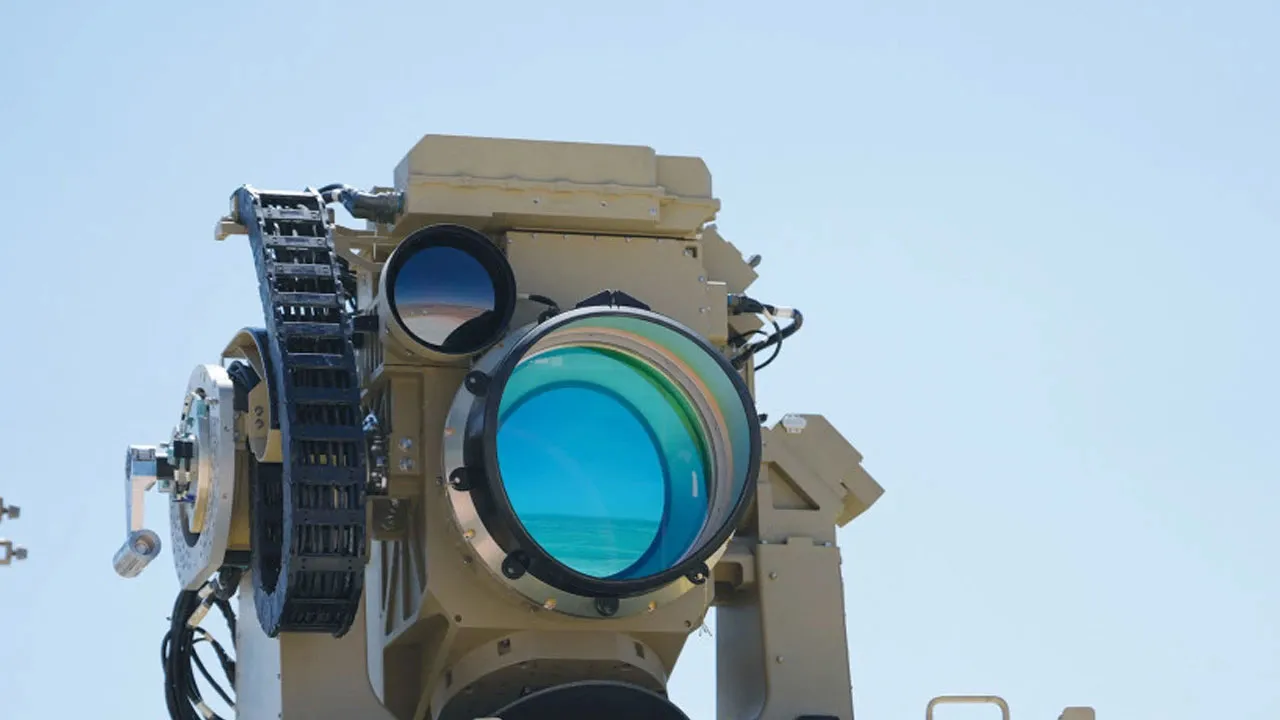
Israel is developing space-based laser technology capable of conducting attacks from space, Defense Minister Israel Katz said on Monday, outlining an ambitious goal to make the country a global leader in space warfare capabilities.
Speaking during a briefing with military reporters, Katz said the Israeli government is investing in top scientific talent to advance next-generation defense technologies.
"One of the main goals set by the prime minister and myself is to recruit the best minds," Katz said. "To date, no country has the capability to conduct attacks from space. We must become the world's leading nation in this field."
He added that achieving such a capability would strengthen Israel's deterrence and military advantage against adversaries with significant resources.
Katz had previously stated last Thursday that Israel was committed to becoming a leading power in space warfare. However, Monday's remarks marked the first time he explicitly referred to the development of space-based laser weapons.
Israel is already considered a leader in directed-energy defense systems. The country has developed the Iron Beam ground-based laser defense system, designed to intercept rockets, drones, and mortar shells.
According to The Jerusalem Post, Israeli defense company Elbit Systems is also working on technology that could enable fighter aircraft to fire laser weapons in future combat operations.
Katz's comments suggested that Iran remains a primary focus of Israel's space defense strategy.
During this year's conflict with Iran, Israel reportedly struck several facilities linked to Iran's space program, including sites believed to be involved in developing anti-satellite capabilities.
It remains unclear whether Katz's remarks were also intended to discourage countries such as Russia and China from assisting Iran's space ambitions.
Katz's assertion that no other country possesses space attack capabilities is disputed.
Both Russia and China have previously demonstrated anti-satellite (ASAT) capabilities by successfully destroying their own satellites during military tests.
Defense analysts also note that laser technology could eventually be used to disable or destroy enemy satellites while potentially reducing the amount of dangerous orbital debris created by conventional anti-satellite weapons.
There has also been speculation that Israel's Arrow-3 missile defense system, which is designed to intercept ballistic missiles outside the Earth's atmosphere, could theoretically be adapted to engage satellites if required.
Meanwhile, many countries are exploring a range of counter-space technologies, including satellite jamming, cyberattacks, electronic interference, orbital maneuvering systems, and laser-based capabilities.