- National
- Bangladesh
- Business
- International
- Sports
- Entertainment
- Politics
- Technology
- Life Style
- Religion
- Opinion
- FIFA World Cup 2026
Sunday, 16 August 2026


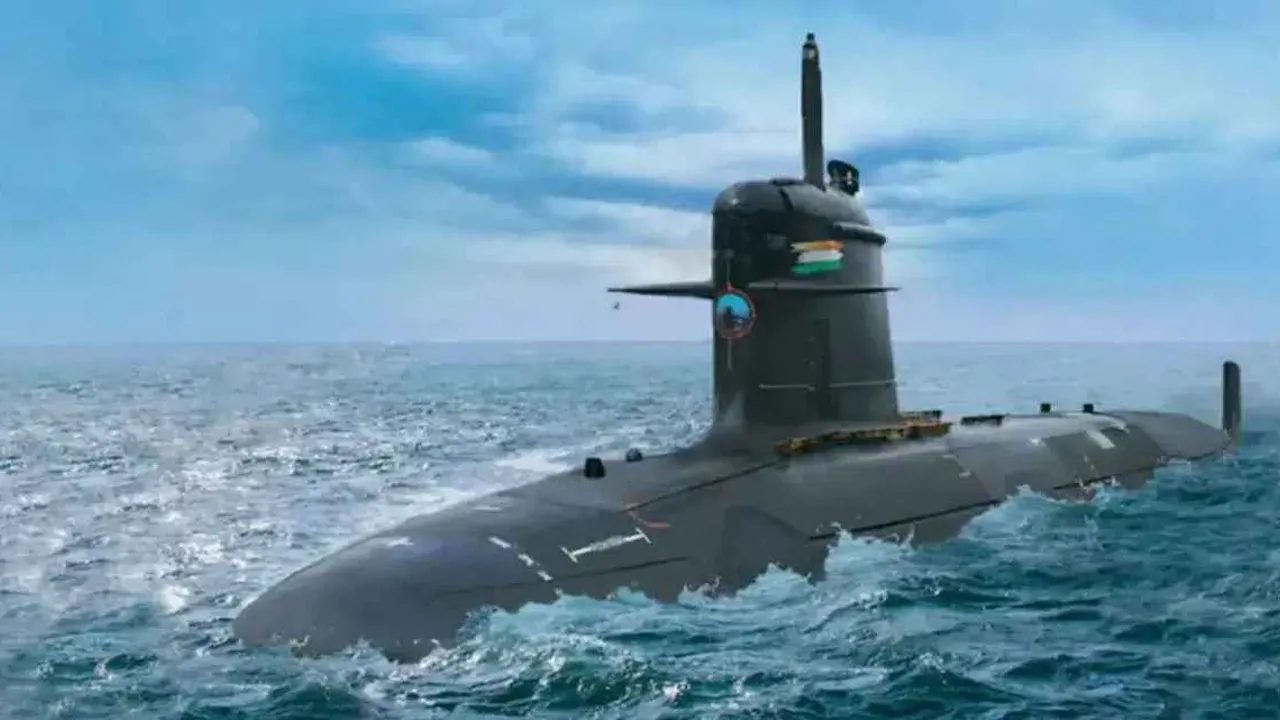
India is reportedly preparing to acquire six advanced conventional submarines from Germany as it seeks to strengthen its naval capabilities in the Bay of Bengal and Arabian Sea amid growing maritime competition with China and Pakistan.
According to an NDTV report citing Indian Defence Ministry sources, the proposed acquisition has an initial estimated budget of around ₹70,000 crore.
The proposal, known as Project 75 India (P-75I), has reportedly been submitted to the Cabinet Committee on Security, chaired by Prime Minister Narendra Modi. A decision could be taken at an upcoming meeting.
If approved, the submarines are expected to be built jointly in India by Mazagon Dock Shipbuilders Ltd. and Germany's ThyssenKrupp Marine Systems (TKMS) under India's strategic-partnership and “Make in India” framework.
Advanced conventional submarines
Unlike nuclear-powered submarines, conventional submarines typically rely on diesel engines and batteries. The proposed vessels are expected to feature air-independent propulsion (AIP), allowing them to remain underwater for longer periods without surfacing frequently.
The project is part of India's broader effort to expand and modernize its submarine fleet, particularly as Chinese naval activity increases in the Indian Ocean region.
The submarines are expected to incorporate advanced stealth features and weapons systems, although the final configuration would depend on the eventual contract and technical negotiations.
India's Navy first sought approval for advanced conventional submarines in 2018. The project was subsequently granted an “Acceptance of Necessity,” with an initial estimated cost of about ₹43,000 crore. The projected cost has since risen substantially.
The acquisition would also mark another major phase in India's long-running submarine modernization program. India previously acquired submarines from Germany and later developed the Scorpène-class fleet with French assistance under the separate Project 75.
If the P-75I deal moves forward, the six new submarines would provide India with additional underwater capabilities at a time when New Delhi is seeking to maintain a stronger naval presence across both the Arabian Sea and Bay of Bengal.