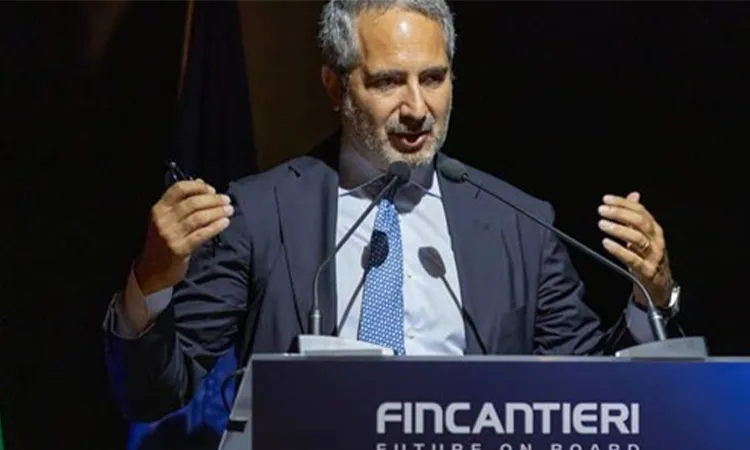
Fincantieri is exploring nuclear power for ships, positioning Italy in the global race for next-generation marine propulsion. Under CEO Pierroberto Folgiero, the company views mini-nuclear reactors on merchant vessels as a major industrial, energy, and environmental breakthrough.
Gilberto Pichetto Fratin, Italy’s Minister of the Environment and Energy Security, has highlighted Fincantieri's merchant ships as an ideal testing ground for these mini-reactors. Confirming the initiative, Folgiero stated, "We have been studying nuclear power at sea for some time."
Folgiero explained that a nuclear-powered ship could sail for 20 to 25 years without refueling. This would dramatically reduce the environmental impact of maritime transport, an industry where cutting carbon emissions remains a major challenge. Next-generation nuclear power offers a radically different solution compared to traditional and alternative fuels.
Beyond technology, Folgiero sees this as a crucial economic opportunity for Italy and Europe.
A worldwide competition to develop fourth-generation marine nuclear power is underway. The first to succeed will secure lasting industrial advantages, expertise, and supply chains.
Currently, commercial shipbuilding is heavily dominated by China and South Korea. However, Folgiero believes new propulsion technologies could shift this global balance.
Folgiero also revealed that these mini-reactors could be powered by plutonium—spent fuel from traditional uranium-based reactors. This approach repurposes existing nuclear waste, which still holds massive energy value. Because it relies on spent fuel rather than newly mined uranium, the power source is more accessible geopolitically.
This strategy addresses vital issues of energy security and resource independence, presenting a strategic advantage for Italy.
Fincantieri is not working alone. The company is collaborating with the Italian Navy on the "Minerva" project, alongside industry partners like Ansaldo Nucleare and Newcleo. While Italy is not a traditional nuclear state, Folgiero noted that Italian experts and companies hold deep, ongoing experience from major international nuclear programs.
Though predicting timelines for new technology is difficult, experts suggest the first sea trials could occur early in the next decade.
International competition is fierce, with France drawing on its naval nuclear experience and South Korea investing heavily in advanced reactors. Folgiero stressed the urgency of acting now to secure a leading role in the maritime sector's future.
If ships can indeed operate for a quarter of a century without refueling, the question will no longer be whether mini-nuclear power is controversial, but how fast the world can adopt it.