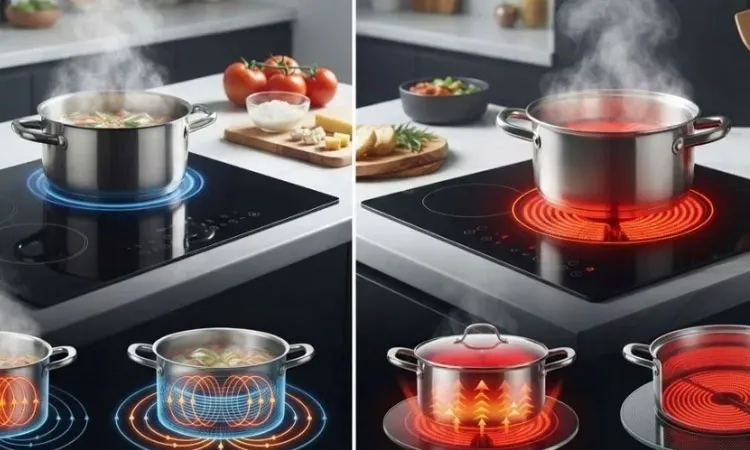
As gas prices rise and safety concerns grow, many households are switching to electric stoves. The two most common options are induction and infrared cooktops. While they look similar they use different technologies and vary in energy use cooking speed and safety.
An induction stove uses magnetic energy to heat the cookware directly. The stove surface stays relatively cool while the pot heats up, making cooking faster and more energy-efficient. However induction works only with magnetic cookware such as iron or compatible stainless steel. Cooking also stops during a power outage.
An infrared stove uses a heating element that becomes red hot and transfers heat to the cookware. It works with almost all types of pots and pans, including aluminum glass steel and clay. However it uses more electricity, heats the surrounding area, and its glass surface remains very hot after cooking.
In terms of efficiency induction cooktops convert about 85–90% of energy into cooking, while infrared models typically achieve 65–70% efficiency. As a result, induction generally consumes less electricity over time.
Induction also offers quicker temperature control allowing heat to increase or stop almost instantly. Infrared cooktops respond more slowly because the heating element takes time to cool down.
For safety induction has an advantage because it does not heat without suitable cookware. Infrared cooktops remain hot after use increasing the risk of accidental burns.
The better choice depends on your needs. If you want faster cooking, lower electricity bills and improved safety an induction stove is the better option. If you prefer using your existing cookware and want a cooking experience similar to a gas stove an infrared cooktop may be more suitable.