Bangladesh’s economic recovery remains fragile six months into the new government's tenure with negative trends outweighing signs of progress, according to local think tank Centre for Policy Dialogue (CPD).
Presenting an assessment of the government’s first 180 days at a media dialogue in Dhaka on Monday the CPD Distinguished Fellow Dr. Debapriya Bhattacharya noted that while inflation has eased, persistent structural weaknesses in investment, revenue collection, industrial output and the financial sector continue to drag down overall growth.
The report evaluated 362 concrete actions across nine sectors. While the government took positive steps in governance, public finance, banking and trade the CPD stressed that policy pledges without execution were excluded from the evaluation.
Easing Inflation vs. Stagnant Growth
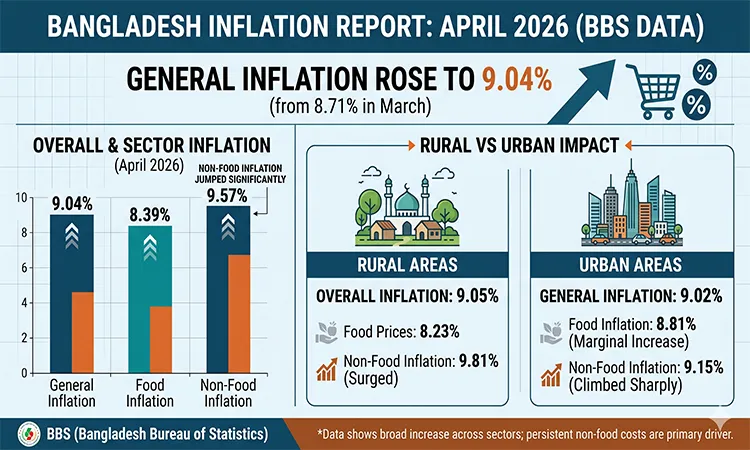
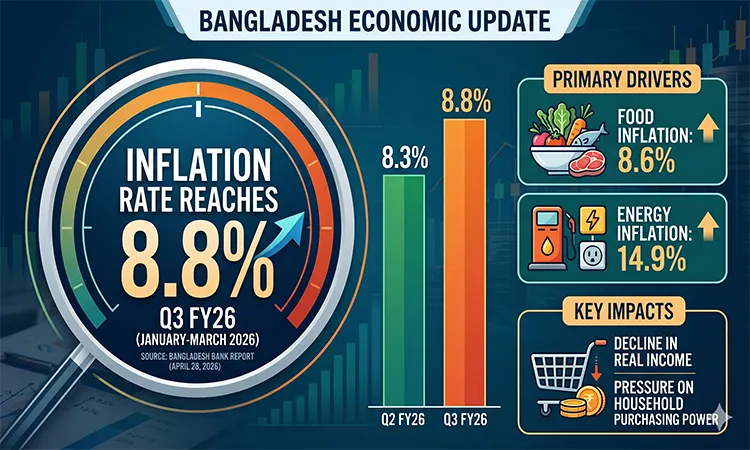
Headline inflation declined to 8.3% in July from 9.1% in February and food inflation fell to 7.2% from 9.3%. However the real wage growth remained negative despite a minor uptick in the wage rate index.
A recovery in output and investment remains elusive. Industrial and manufacturing growth both dropped to zero from over 3.5%. Net foreign direct investment declined to $594 million from $662 million while private-sector credit growth slowed to 4.5%.
Mounting Revenue Shortfalls
Revenue mobilization stands as one of the administration's primary hurdles. National Board of Revenue (NBR) growth fell to 11.1% during March–May down from 12.4% earlier in the fiscal year, while total tax growth plunged to 4.9%.
The CPD warned that meeting the FY27 revenue target of Tk.6.95 trillion will require an unlikely 42% growth rate. Estimating a shortfall of up to Tk.1.40 trillion (19–20% of the target) and the CPD urged the government to set realistic revenue expectations rather than slashing Annual Development Programme (ADP) spending later.
External Pressures and Industry Bottlenecks
The external sector faces mixed results. Exports grew by 3.5% with reversing previous contractions but imports rose 18.1%. Remittance growth slowed to 11.8%, and monthly overseas employment dropped nearly by half. Consequently the trade deficit expanded to $10.4 billion also shifting the current account from a $1.3 billion surplus to a $0.6 billion deficit. However foreign exchange reserves rose to $32.3 billion.
In the domestic economy the banking reforms saw progress through bank consolidations and the implementation of the Bank Resolution Act 2026 for non-viable NBFIs. However the central bank autonomy remains a concern. Additionally, ongoing gas supply disruptions caused by LNG terminal issues at Moheshkhali continue to strain key manufacturing sectors like textiles, steel and ceramics.
Urgent Call for Structural Reform
Dr. Bhattacharya emphasized that the government has yet to deploy a unified, comprehensive reform package. To navigate the crisis CPD recommended framing a shorter-term "core budget" covering October 2026 to June 2027 based on real-time data.
The CPD called on the government to use September to present a clear structural reform roadmap to parliament also addressing cabinet coordination, public expenditure, banking restructuring, energy security and institutional capacity.