


Individuals with an annual income exceeding Tk 15 million may face a 35% income tax starting next fiscal year, up from the current maximum rate of 30% for incomes over Tk 3.85 million.
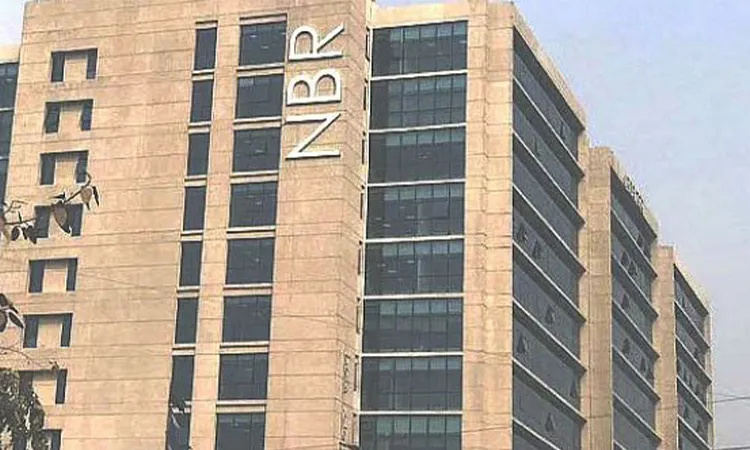
The National Board of Revenue (NBR) aims to increase the tax burden on high-net-worth individuals (HNWIs) to ease pressure on low-income groups and combat rising income inequality. The plan, outlined in the NBR’s Medium and Long-term Revenue Strategy (MLTRS) for FY26–FY35 published in June 2025, is projected to take effect for income earned in FY27.
Speaking to the FE, NBR Member (Income Tax Policy) Barrister Mutasim Billah Faruqui said the move shifts Bangladesh toward a progressive taxation regime. "We want to focus more on direct taxation," Mr. Faruqui noted, pointing out that while other South Asian nations generate over 50% of domestic revenue from direct taxes, Bangladesh currently collects only 30% to 35%.
However, business leaders have expressed concern. Iqbal Chowdhury, Vice-President of the Foreign Investors' Chamber of Commerce and Industry (FICCI) and CEO of LafargeHolcim, warned the hike could penalize compliant taxpayers. He noted that salaried individuals would bear the brunt because their taxes are deducted at source. "This is a penalty for becoming an honest taxpayer... This may encourage more tax evasion," Mr. Chowdhury said.
To establish what it calls "tax justice," the NBR also plans to scrap the existing wealth surcharge system—which ranges from 10% to 35% for assets over Tk 40 million—and replace it with a separate wealth tax in the upcoming fiscal year.
According to Bangladesh Bank data, the country has around 23,000 HNWIs, with bank deposits averaging Tk 400 million each. While the NBR lacks compiled data on their total tax contributions, officials state all these depositors are within the tax net. Currently, only about 400 HNWIs—mostly company directors and shareholders—are registered under the Large Taxpayers Unit (LTU). Tax officials estimate that if all 23,000 HNWIs fully paid their taxes even at current rates, individual taxpayers could account for up to 80% of total direct tax revenue.
The policy push comes amid worsening income inequality. A World Bank report from November 26, 2025, revealed that Bangladesh’s Gini coefficient—a measure of inequality where 0 is perfect equality and 100 is perfect inequality—rose from 51 to 54 points. Urban inequality grew from 33.1 to 34.5, while rural inequality slightly declined from 29.2 to 28.2. For historical context, Bangladesh Bureau of Statistics (BBS) data shows that in 1972, only five bank accounts in the country held more than Tk 10 million.

