
- National
- Bangladesh
- Business
- International
- Sports
- Entertainment
- Politics
- Technology
- Life Style
- Religion
- Opinion
Thursday, 21 May 2026

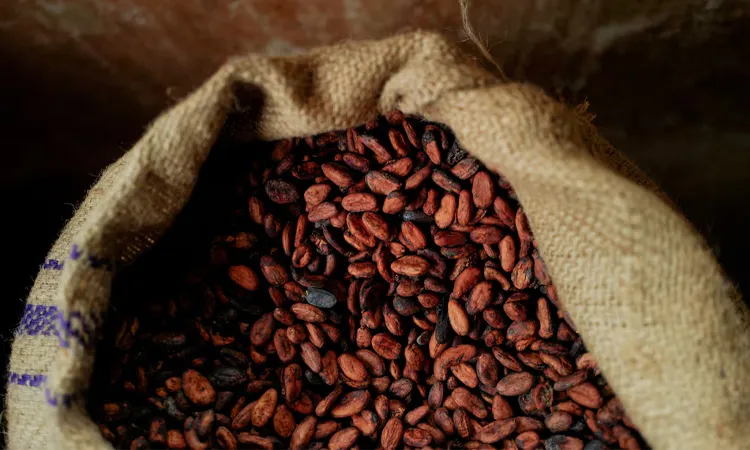
After a year of shrinking bar sizes, extra wafers and vegetable-fat substitutes, major confectionery companies are finally putting real cocoa back into their chocolate.
The shift is being driven by a massive 70% drop in global cocoa futures from their record highs in late 2024. For consumers, this promises a return to original recipes and lower shelf prices, while offering a much-needed demand recovery for impoverished cocoa farmers.

U.S.-based confectionery giant Hershey recently announced plans to restore the cocoa content in its products. Following public criticism over reformulating iconic items into lower-quality "chocolate candy," Hershey confirmed that by next year, all Hershey’s and Reese’s products will revert to their original, cocoa-rich recipes.

Industry experts anticipate other major brands will quickly follow suit. "It absolutely makes sense to switch back to real chocolate at current cocoa price levels," said independent consultant Roger Bradshaw.

The Boom and Bust of Cocoa
In 2024, extreme weather and crop disease in West Africa drove cocoa prices to nearly $12,000 a metric ton. In response, chocolate makers reduced cocoa usage, raised prices, and invested heavily in cocoa-free alternatives made from ingredients like oats and sunflower seeds.

This drastic pivot caused global demand for cocoa to crash to a nine-year low, which in turn triggered the recent 70% collapse in bean prices.
Today, producing authentic chocolate is becoming cheaper than manufacturing vegetable-fat alternatives. Barry Callebaut, the world's largest chocolate processor—which supplies giants like Nestle—noted that the lower cocoa costs are already pushing customers back to traditional chocolate.

Consumer Relief and Market Outlook
Because major manufacturers purchase ingredients months in advance, it typically takes about 10 months for commodity price drops to reach supermarket shelves. However, retail pressure is already forcing changes. Mondelez recently trimmed some chocolate prices in Europe and subsequently reported a rise in sales volumes.
Legislative changes are also accelerating the return to real chocolate. Brazil, the world's sixth-largest chocolate consumer, recently passed a law requiring any product labeled "dark chocolate" to contain at least 35% cocoa solids, aligning its standards with Europe and North America.
While the return to real cocoa is excellent news for the roughly 2 million farmers in top-growing nations like Ivory Coast and Ghana, analysts warn a full market recovery will take time. Furthermore, as companies look to hedge against future price shocks, some cheaper chocolate alternatives are expected to remain a permanent fixture in the mass-market segment.
