
- National
- Bangladesh
- Business
- International
- Sports
- Entertainment
- Politics
- Technology
- Life Style
- Religion
- Opinion
- FIFA World Cup 2026
Wednesday, 29 July 2026

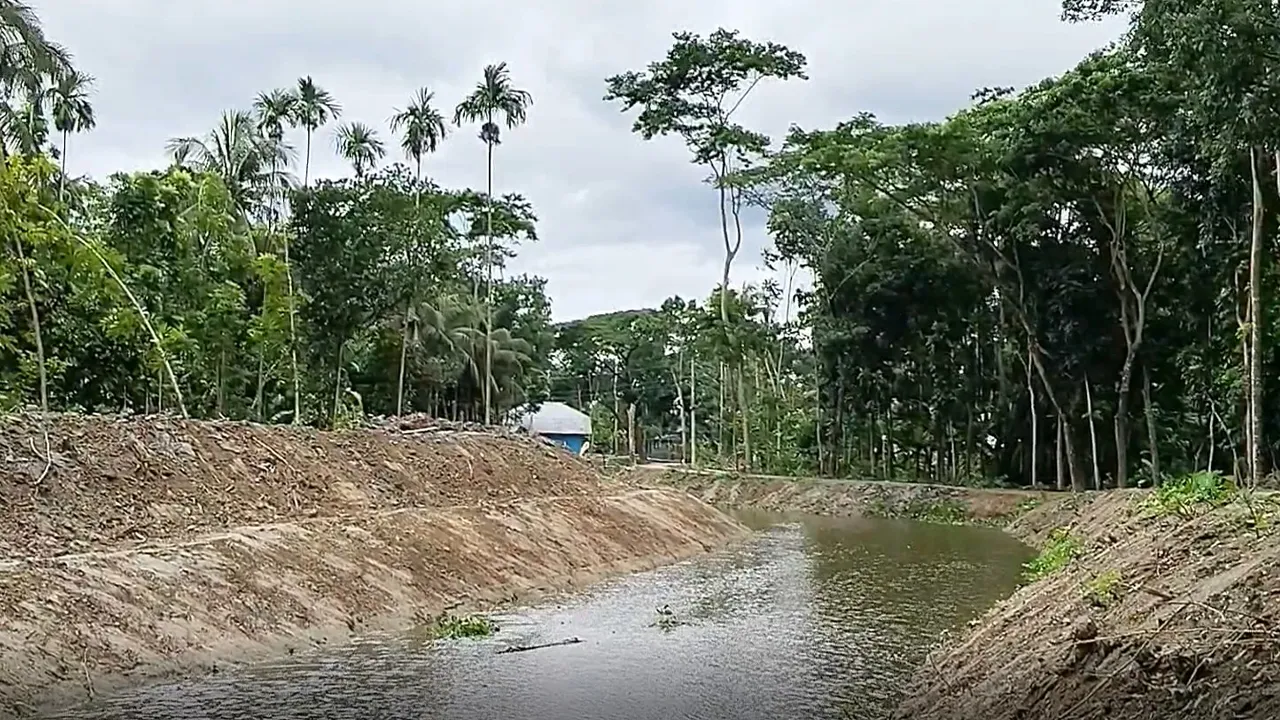
Residents and farmers in Rajapur Upazila of Jhalokati district are seeing renewed hope after the dredging of nearly 7 kilometers (4.3 miles) of canals restored water flow and improved irrigation across several unions.
The project has already increased water circulation in the rehabilitated canals, helping reduce waterlogging and improving access to irrigation for thousands of farmers. Local officials also expect fish production to increase, creating additional income opportunities for fishing communities.
For years, the Shuktagar, Pingri, and Kathakhali canals were clogged by sediment and affected by illegal encroachment, severely restricting water flow. The deteriorating waterways contributed to waterlogging during the rainy season and irrigation shortages during the dry season, making farming and daily household activities increasingly difficult.
Under the government's Pond and Canal Development Project and the Climate and Disaster-Resilient Water Resources Management Project, five key canals in Rajapur have now been restored.
The benefits extend beyond agriculture. Improved water flow has encouraged the return of native fish species, providing new food and income sources for local residents. Officials estimate that nearly 24,000 people will benefit from improved water access for household use and farming.
The project, costing 125.82 million Bangladeshi taka, restored approximately 7 kilometers of waterways connecting the Shuktagar section of the Dhansiri River to the Pingri and Kathakhali canal systems.
Abhijit Majumdar, an engineer with the Rajapur Local Government Engineering Department (LGED), said the work was carried out in accordance with government standards. He said the restored canals will improve irrigation, increase agricultural production, and strengthen the local economy.
Local residents say the canals, once symbols of hardship, have become a source of optimism. They expect the restoration to deliver lasting environmental and economic benefits for the region.
