
- National
- Bangladesh
- Business
- International
- Sports
- Entertainment
- Politics
- Technology
- Life Style
- Religion
- Opinion
- FIFA World Cup 2026
Wednesday, 29 July 2026

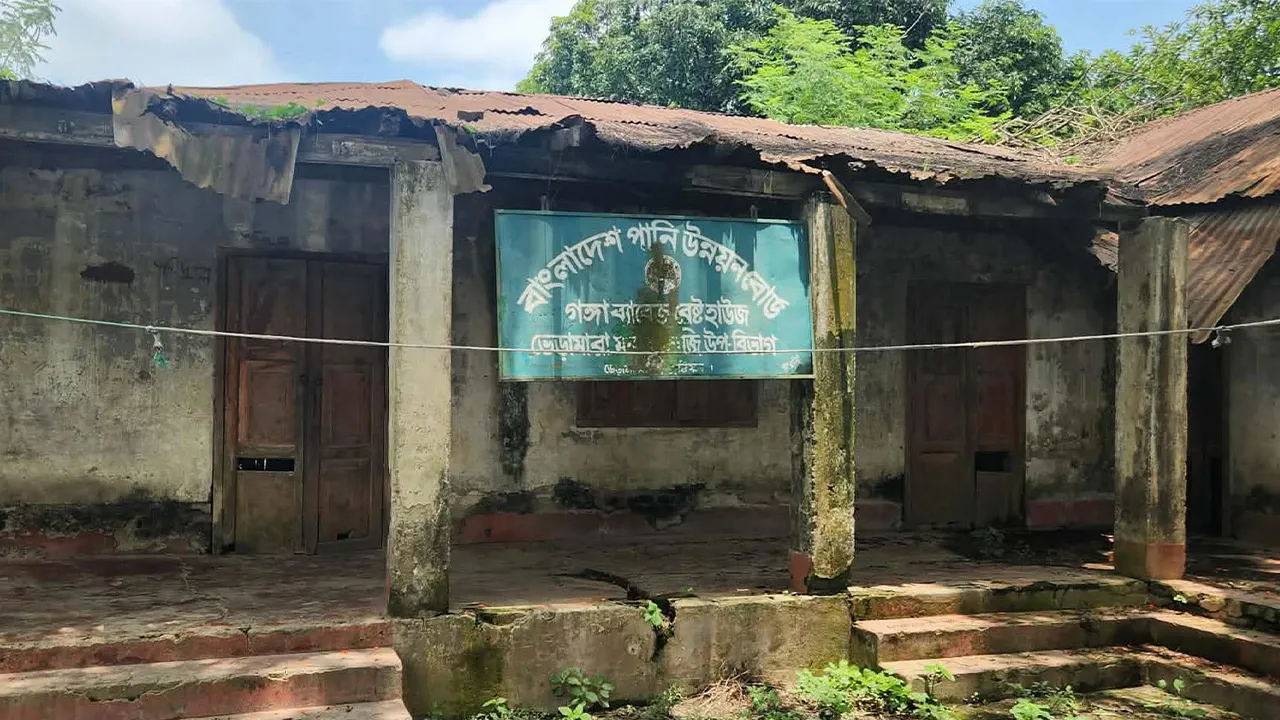
Residents of Bheramara in Kushtia are demanding the government reconsider the location of the proposed Padma Barrage, arguing that it should be built at the original site in Moslempur, Bahirchar Union, where the foundation stone for the Ganges Barrage Project was laid 46 years ago.
According to the Ministry of Water Resources, the approved barrage will be constructed at Pangsha in Rajbari district. The project includes a 2.1-kilometer main barrage with 78 spillway gates, 18 undersluice gates, and a navigation lock. Future plans also include a railway bridge and infrastructure capable of generating approximately 113 megawatts of hydropower.
Officials say the project will benefit 120 upazilas across 19 districts in the Khulna, Dhaka, Rajshahi, and Barishal divisions, including Kushtia, Jessore, Khulna, and Satkhira.
The original Ganges Barrage Project was launched on December 27, 1980, when then-Water Resources Minister Anwar-ul-Haq, under the government of President Ziaur Rahman, laid the foundation stone at Moslempur near Hardinge Bridge in Bheramara.
The project was designed to:
Expand irrigation across southwestern and northwestern Bangladesh. Supply water to the Ganges-Kobadak (G-K) Irrigation Project.
Despite those ambitions, only preliminary work—including feasibility studies, research facilities, and a foundation stone—was completed. Construction never began.
The Executive Committee of the National Economic Council (ECNEC) has now approved the first phase of the Padma Barrage project at a cost of BDT 34,497 crore. Officials say the broader master plan is valued at BDT 50,443 crore and will be implemented in two phases.
Government planners say the project is increasingly important as the 1996 Ganges Water Sharing Treaty between Bangladesh and India approaches its scheduled expiration.
Residents of Bheramara argue that relocating the project to Pangsha ignores decades of planning and investments already made at the original site.
They note that land was acquired in Moslempur, research facilities and a rest house were built, and feasibility studies were conducted. They believe the original location would better support irrigation, revive rivers in southwestern Bangladesh, and strengthen long-term water management.
Community members have urged the government to review the decision before construction begins.
