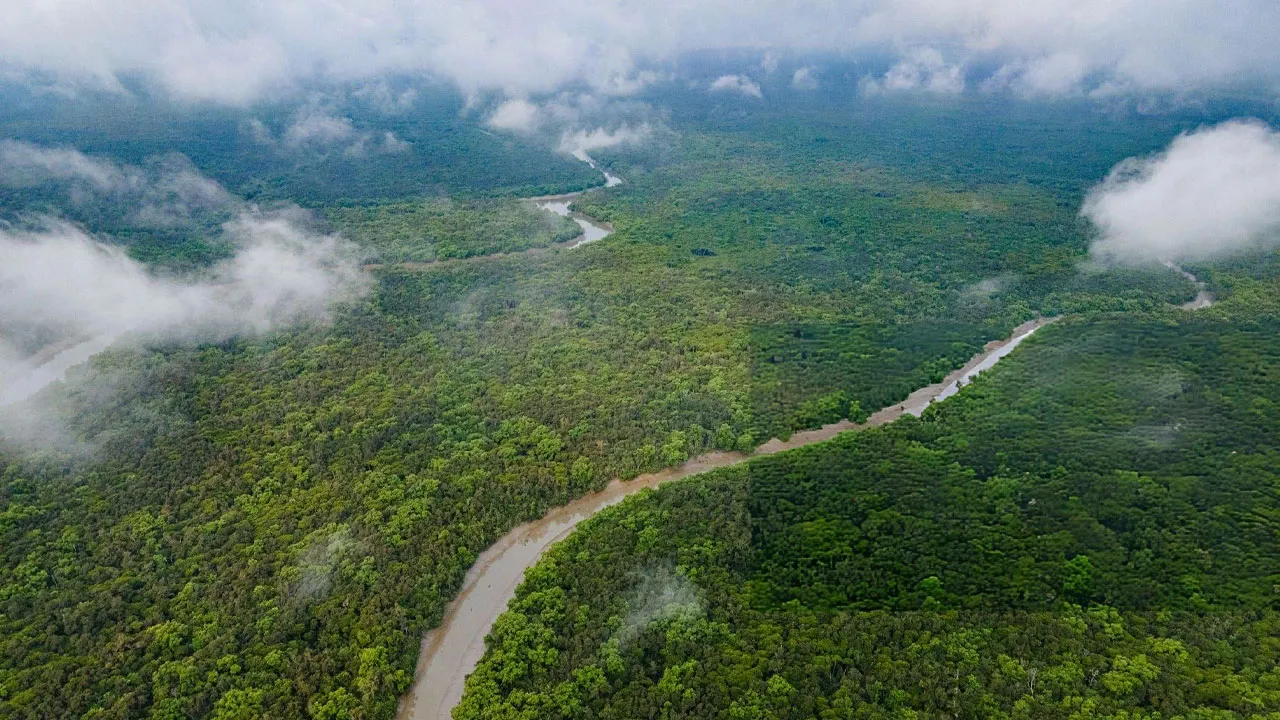
New tourism opportunities are emerging around the Sundarbans in the Khulna region ahead of World Tourism Day, with tourist vessels being prepared for the upcoming season and tour operators becoming increasingly active.
Tourism stakeholders expect visitor numbers to rise during the coming season and have called for further initiatives to promote the Sundarbans, the world’s largest mangrove forest, as an international tourism destination.
According to the Forest Department, the main tourism season in the Sundarbans generally runs from October to February, when weather conditions are favourable and the rivers and canals are relatively calm.
Around 100,000 tourists visited the Sundarbans in the 2024–25 fiscal year, according to the information cited by tourism stakeholders. Of them, around 40,000 entered the forest on tourist vessels.
Nine-year-old Sumaiya Tabassum, who visited the Sundarbans with her family, said she was particularly eager to see a tiger but did not get the opportunity. She said she enjoyed seeing deer and other wildlife and greatly enjoyed the trip.

Tourist Sahida Akter Lata told BSS that she visited the Sundarbans out of interest in its natural environment and wildlife.
She said spending time amid the greenery, rivers and tranquil forest environment was completely different from busy urban life.
Sahida said she was particularly interested in seeing the Sundarbans’ biodiversity, deer, monkeys and different species of birds, while also hoping to see a Royal Bengal Tiger if possible.
Another tourist, Rubel, said travelling to the Sundarbans was not only enjoyable but also educational for children, as they could see in person the natural environment and wildlife they had previously learned about from books and television.
Tour operators said visitor numbers generally increase from November to March, when families from different parts of the country travel to the Sundarbans.
Syed Atik Shahriar Takim, director of The Interval Tours, said tourist numbers normally increase from November to March and expressed hope that visitor numbers would rise this year as well.
Sundarbans tourism also benefits people from various local professions, including shopkeepers, fish and vegetable sellers, rickshaw and auto-rickshaw drivers, transport workers, hotel and restaurant employees, boatmen, guides and day labourers.
However, Mazharul Islam Kochi, senior vice-president of the Tour Operators Association of Sundarbans (TOAS), said tourism in the Sundarbans has been declining.
He said only around 40,000 tourists entered the forest by tourist vessels last year, while the number of visitors travelling to Karamjal by small boats had also declined. Overall, he said, the number of tourists was not more than around 100,000.
According to Kochi, one reason for the decline is the construction of unauthorised resorts around the Sundarbans.
He alleged that some resort operators attract tourists by advertising facilities and entertainment that are not available inside the Sundarbans. As a result, some visitors stay at the resorts instead of entering the forest.
A 20-year “Sundarbans Ecotourism Master Plan” has been formulated to protect the forest’s ecological balance and enhance its appeal to domestic and international tourists. Rather than focusing on conventional infrastructure development, the plan provides a framework for sustainable tourism while keeping the natural environment intact.
Professor Dr Md Wasiul Islam of Khulna University’s Forestry and Wood Technology Discipline, who served as deputy chief of party during preparation of the master plan, said it took nearly two years to formulate.
He said the master plan is essentially a technical roadmap that integrates the environmental and economic aspects of the Sundarbans. According to him, its implementation would contribute to tourism development, strengthen the economic foundations of local communities and accelerate biodiversity conservation.
He said the plan aims to promote environment-friendly tourism, management and marketing in and around the Sundarbans while contributing to biodiversity conservation and improving the socioeconomic conditions of local communities.
The plan also seeks to attract more foreign tourists and increase foreign-exchange earnings. Professor Wasiul said the Sundarbans’ peaceful, secluded environment and moonlit nights could be particularly appealing to international visitors.
Meanwhile, TOAS in Khulna has organised a special roadshow for Sunday morning at 9am to mark World Tourism Day.
The roadshow will begin at the BIWTA launch terminal and pass through the Deputy Commissioner’s Office and Shaheed Hadis Park before ending at Shibbari intersection.
TOAS Organising Secretary Sheikh Abir Imtiaz said the event was not merely a rally but a symbolic initiative to highlight the tourism potential of Khulna and the Sundarbans.
He said Khulna, known as an industrial city, could become an important gateway to tourism in the region, with the Sundarbans at the centre of that potential.

Tourism stakeholders said establishing the Sundarbans as an international tourism destination requires long-term planning, research, international branding and coordinated initiatives by government and private organisations.
They also stressed improvements in transportation, tourism infrastructure, research facilities, skilled manpower, international promotion and integrated long-term planning.
They said coordinated efforts by tourists, tour operators, guides, boat workers, local communities and the Forest Department could play an important role in conserving the Sundarbans.

Tourism stakeholders also said TOAS has taken an initiative to conduct cleanliness drives to remove plastic and waste from different areas of the Sundarbans.
They believe there is an opportunity to develop Khulna as an international tourism gateway by integrating the Sundarbans, historical sites in Bagerhat, river-based tourism, folk culture and the natural diversity of southwestern Bangladesh.