


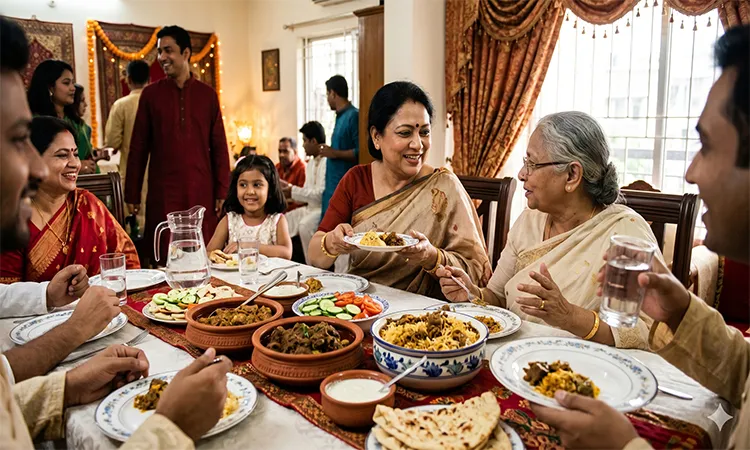
Eid-ul-Azha is a celebration of togetherness, gratitude, and undeniably, rich food. However, the abundance of beef and mutton dishes during this festive period often leaves many struggling with bloating, lethargy and digestive discomfort. Enjoying the festivities does not mean counting every bite; rather, it is about making small, intentional choices to feast with joy and stop with wisdom.
For Bangladeshi families, hospitality is traditionally measured by the amount of food pressed onto a guest's plate. Navigating these gatherings without overeating requires a mix of practical strategy and polite boundary-setting. Smart Strategies for the Eid 'Dawat'
Don't Arrive on an Empty Stomach: Fasting or skipping meals before heading to an Eid dawat (feast) invariably leads to overeating. Eating a light, protein-rich snack beforehand such as a boiled egg, a cup of yogurt or a handful of nuts stabilizes blood sugar and keeps extreme hunger at bay, allowing you to make conscious food choices.
Pre-load with Fiber: Starting your meal with a portion of salad or vegetables stretches the stomach wall and signals the brain that food is arriving. This natural buffer prevents a rapid spike in blood sugar and reins in the impulse to overindulge in heavy meat dishes.
Use Smaller Plates: Portions naturally scale down when using smaller dinnerware. Visually, a full smaller plate satisfies the brain's expectation of a hearty meal without the physical consequence of an oversized portion.
Pace Your Eating: Eating too quickly prevents the stomach from communicating fullness to the brain in time, leading to overconsumption. Furthermore, rapid eating causes you to swallow excess air, which increases abdominal pressure and forces stomach acid upward, resulting in painful heartburn or acid reflux.

Managing Host Hospitality and Liquid Calories
Dealing with well-meaning relatives who equate love with "extra rice" or another piece of meat is a standard part of Bangladeshi Eid gatherings. Instead of an outright refusal that might offend your host, buy time by saying, "Everything looks wonderful; let me finish what is on my plate first." This allows you to prioritize your body's signals over social obligation.
Additionally, pay close attention to liquid calories. Sugary soft drinks, processed juices, and traditional sweets rapidly add up after a heavy meal. Opting for water over carbonated beverages significantly reduces the digestive load on your system.
The Power of a Post-Meal Walk
The absolute worst thing to do after a heavy meal is to immediately lie down or collapse onto the sofa. A gentle 10 to 15-minute walk stimulates the digestive tract, helps the stomach empty more efficiently, and prevents the sluggishness associated with a food coma. It also helps your body process the sudden influx of carbohydrates and proteins smoothly.
If you do happen to overeat, avoid spiraling into guilt. One or two days of festive indulgence will not undo your long-term health goals. Simply return to your regular nutritional pattern the next day, stay hydrated, and keep moving.

