


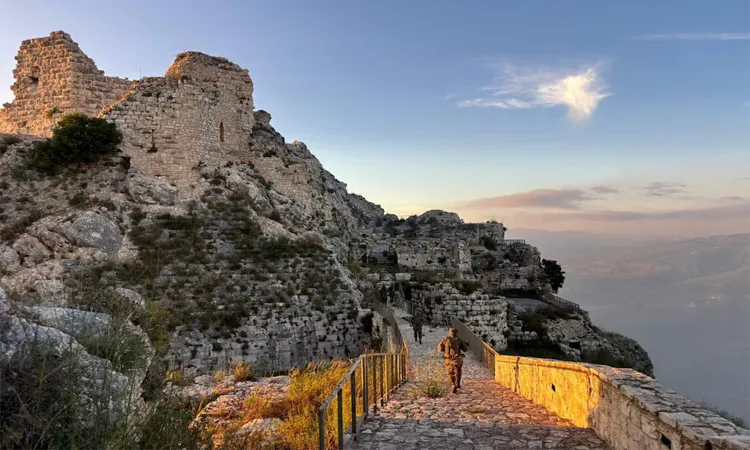
Israeli forces have crossed the Litani River and captured the 900-year-old Beaufort Castle and its strategic mountain ridge in southern Lebanon. The military advance marks Israel's deepest ground incursion into the country since its troop withdrawal in 2000, severely straining an active ceasefire brokered just weeks ago.
According to Israeli military spokeswoman Ella Waweya, large ground forces launched a "large-scale operation" under the 36th Division several days ago. The push targeted the Beaufort Ridge and the Wadi al-Saluki area to dismantle Hezbollah infrastructure and eliminate launching sites. The military confirmed that one Israeli soldier was killed during the operation.
Defense Minister Israel Katz stated that capturing the ridge is vital for defending Galilee border communities, confirming that Israeli troops have already raised their flag over the medieval fortress. Prime Minister Benjamin Netanyahu called the capture a "dramatic shift" in policy, noting that the initiative positions Israeli forces for a potential encirclement of Nabatieh—a key Hezbollah stronghold and economic center.
The escalation comes despite a US-mediated ceasefire that took effect on April 17 and was recently extended for 45 days on May 17. The offensive followed a heavy barrage of rocket fire from Hezbollah into northern Israel on Saturday, which forced school closures and local safety restrictions.
The military push has sparked immediate international outrage over the destruction of cultural heritage. Lebanese Culture Minister Ghassan Salameh accused the Israeli military of deliberately targeting historic landmarks, stating that the iconic Crusader-era castle has sustained extensive damage.
"Southern Lebanon risks losing part of its historical and cultural memory if attacks on archaeological sites continue," Salameh warned. He added that Lebanon will formally request UNESCO to investigate the targeting of local heritage, noting that historic commercial markets, public libraries, and ancient ruins in the Bint Jbeil and Nabatieh districts have already been destroyed. The minister has called for urgent UN protection for 79 endangered sites across Lebanon.
A senior Lebanese military source confirmed that the national army evacuated positions north of the Litani River to ensure troop safety as Israeli forces approached the outskirts of Nabatieh. According to the Lebanese Health Ministry, the conflict has killed over 3,370 people across Lebanon since hostilities began on March 2.

