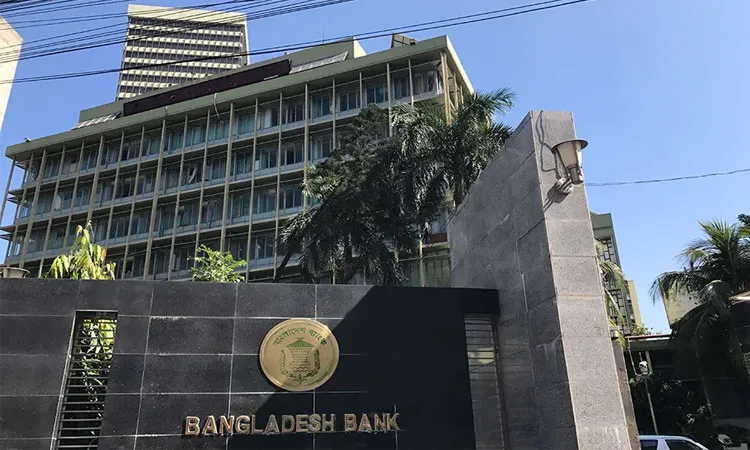
Bangladesh Bank has cautioned that inward remittance flows could face pressure as geopolitical tensions in the Middle East threaten labor migration and economic activity in major host countries.
"Despite high remittance inflows supported by a large stock of existing migrant workers, growth could slow due to migration disruptions and economic uncertainty in host countries," the central bank stated in its latest Quarterly Report on Remittance Inflows, released on Sunday.
According to the report, which analyzes trends for the January–March quarter of fiscal year 2025–26, the scale of the impact will depend heavily on the duration and geographical spread of the US–Iran conflict.
"A brief conflict may have only limited effects, whereas a prolonged regional crisis could significantly reduce remittance inflows and intensify pressure on Bangladesh's external sector," the central bank added.
The warning coincides with a dip in remittances following the Eid-ul-Azha holidays. Central bank data shows that remittance inflows fell nearly 21% to $683.37 million during the first six days of June, compared to $862.59 million during the same period last year.
Despite the early June decline, overall fiscal year performance remains strong. Inward remittances rose nearly 18% to $33.44 billion between July 2025 and June 6, 2026, up from $28.37 billion during the same period in the previous fiscal year.
"In the near term, remittance earnings and labor migration are expected to remain positive, though vulnerable to global uncertainties. Overall, the outlook remains resilient," the central bank said, noting that a smooth flow depends on easing regional tensions.
Dr. Md Ezazul Islam, Director General of the Bangladesh Institute of Bank Management (BIBM) and former executive director of Bangladesh Bank, told The Financial Express that labor demand should recover once the conflict subsides.
"Our workers remain relatively cost-competitive compared to peer countries, so Bangladesh is unlikely to face a major setback in long-term remittance inflows," Dr. Islam said.