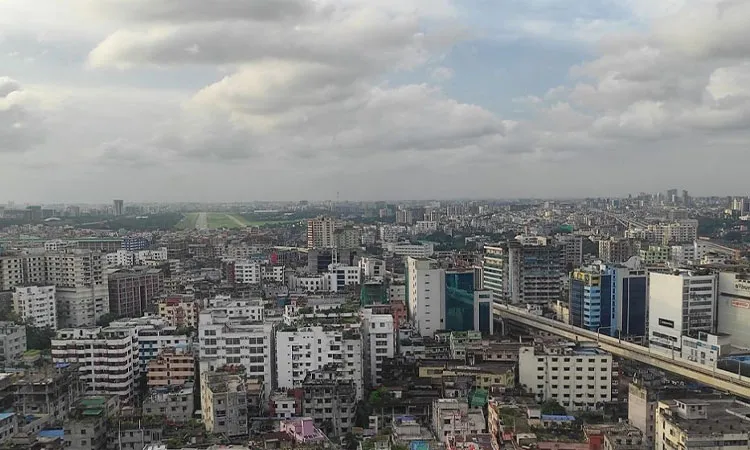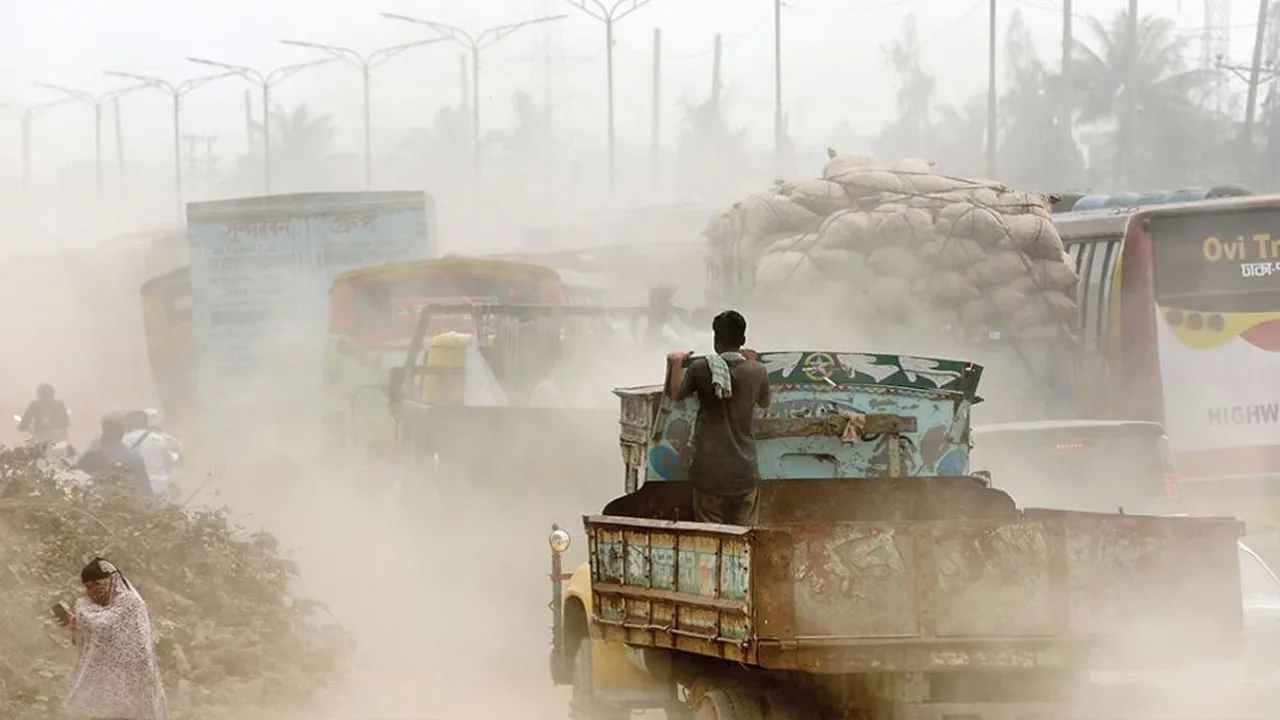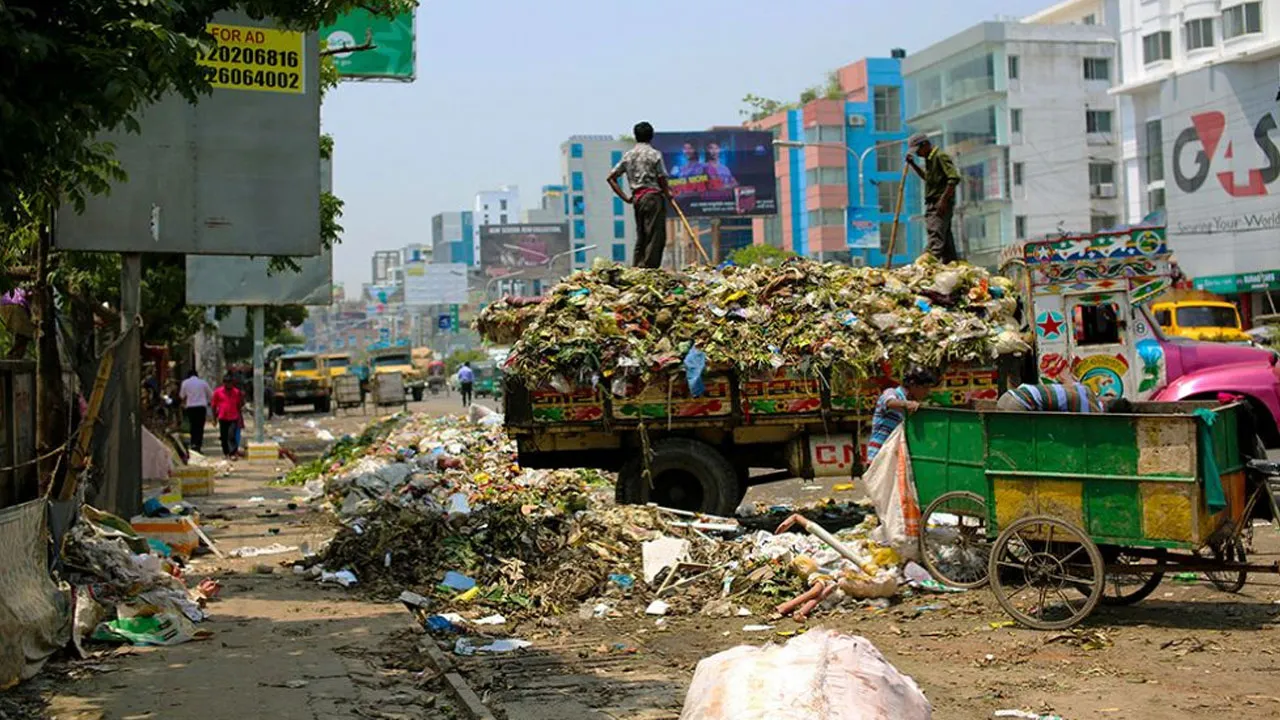
Dhaka ranked as the world's second most polluted city on Tuesday morning, recording an "unhealthy" Air Quality Index (AQI) score of 165 at 9:20 AM.
At this AQI level, the concentration of airborne pollutants is high enough to pose direct health risks to the general public. Globally, Jakarta, Indonesia, topped Tuesday's list with an AQI of 174, while Kinshasa in the Democratic Republic of the Congo ranked third at 157.
The AQI is a vital public health tool that tracks daily air quality to indicate pollution severity and its potential impact on residents. Scores between 151 and 200 are officially classified as "unhealthy," whereas readings climbing above 300 are deemed "hazardous". In Bangladesh, the index is calculated by measuring five major pollutants: particulate matter (PM10 and PM2.5), nitrogen dioxide (NO2), carbon monoxide (CO), sulphur dioxide (SO2), and ozone.
Monitoring these environmental figures is critical for public safety. According to the World Health Organization (WHO), air pollution causes an estimated seven million deaths worldwide each year. These fatalities are primarily driven by severe, pollution-linked conditions, including stroke, heart disease, lung cancer, chronic obstructive pulmonary disease, and acute respiratory infections.