
- National
- Bangladesh
- Business
- International
- Sports
- Entertainment
- Politics
- Technology
- Life Style
- Religion
- Opinion
- FIFA World Cup 2026
Saturday, 27 June 2026

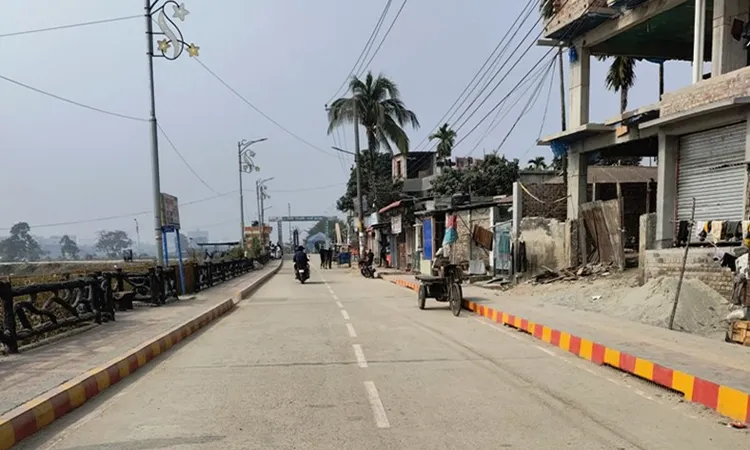
There was a time when the arrival of the monsoon meant knee-deep water on roads. Children struggled to reach school, patients faced delays in getting to hospitals, and traders worked in unsafe and unhealthy market conditions. For many municipalities and city corporations across Bangladesh, this was everyday life. Today, that picture is gradually changing.
The Local Government COVID-19 Response and Recovery Project (LGCRRP) is bringing visible improvements to urban areas through better roads, modern drainage systems, safe footpaths, public toilets, upgraded markets, street lighting, ghatlas, and greener public spaces. Jointly financed by the Government of Bangladesh and the World Bank, the project began in April 2022 and is being implemented in 328 municipalities and 11 city corporations to improve urban services and quality of life.
The economic slowdown following the COVID-19 pandemic hit lower- and middle-income families particularly hard. Alongside infrastructure development, LGCRRP has created approximately 2.87 million person-days of temporary employment, including 932,000 person-days for women. These employment opportunities have helped many families restore their livelihoods, continue their children's education, and recover from the economic impact of the pandemic.
Improved roads and drainage systems have reduced waterlogging in many urban areas, making transportation easier and supporting business activities while improving everyday living conditions.
So far, the project has completed approximately:
The project is currently implementing 1,849 sub-projects under 835 packages, with completion targeted by December 2026. According to project sources, these initiatives are expected to further improve urban services and living standards.
One of LGCRRP's key innovations is the Local Preparedness Plan (LPP). For the first time, a digital GIS-based risk database has been developed for 339 urban local government institutions to support planning for floods, cyclones, heatwaves, climate change, and other disasters.
The database enables local authorities to identify risks, prioritise investments, and prepare climate-resilient development plans. Experts believe this will provide a strong foundation for future urban development across Bangladesh.
To improve transparency and accountability, the project has introduced Integrated Financial Management (FM) and Management Information System (MIS) software across participating urban local government institutions.
These systems allow real-time monitoring of project progress, costs, and quality. The project is also adding e-payment facilities to web-based municipal services, making public services more accessible while supporting Bangladesh's digital transformation.
Although the project initially faced delays in appointing a project director, administrative changes, and other implementation challenges, work has continued steadily.
According to project data, financial progress has reached 84.14 percent, while physical progress stands at 90.25 percent. The World Bank has consistently rated project implementation as "Satisfactory." In April 2026, a high-level World Bank delegation visited several municipalities and city corporations and expressed satisfaction with both the quality of work and implementation progress.
A major strength of LGCRRP is its participatory planning process. Local residents, elected representatives, women, young people, senior citizens, and other community groups have all contributed to identifying development priorities.
This community-based approach has helped ensure that project investments reflect the actual needs of local people.
Project Director Nazmus Sadat Md. Zillur Rahman said the project remains committed to building climate-resilient, sustainable, and inclusive urban areas while strengthening local government institutions to deliver better services.
He also acknowledged the support of the World Bank, the Local Government Division, Finance Division, Planning Commission, IMED, ERD, LGED, and officials and staff of participating municipalities and city corporations.
As Bangladesh continues to urbanise, LGCRRP represents more than an infrastructure project. It is contributing to safer roads, improved public services, climate resilience, employment opportunities, and stronger local institutions. Through these initiatives, the project is helping create more modern, sustainable, and livable cities for millions of citizens.
