- National
- Bangladesh
- Business
- International
- Sports
- Entertainment
- Politics
- Technology
- Life Style
- Religion
- Opinion
- FIFA World Cup 2026
Thursday, 27 August 2026


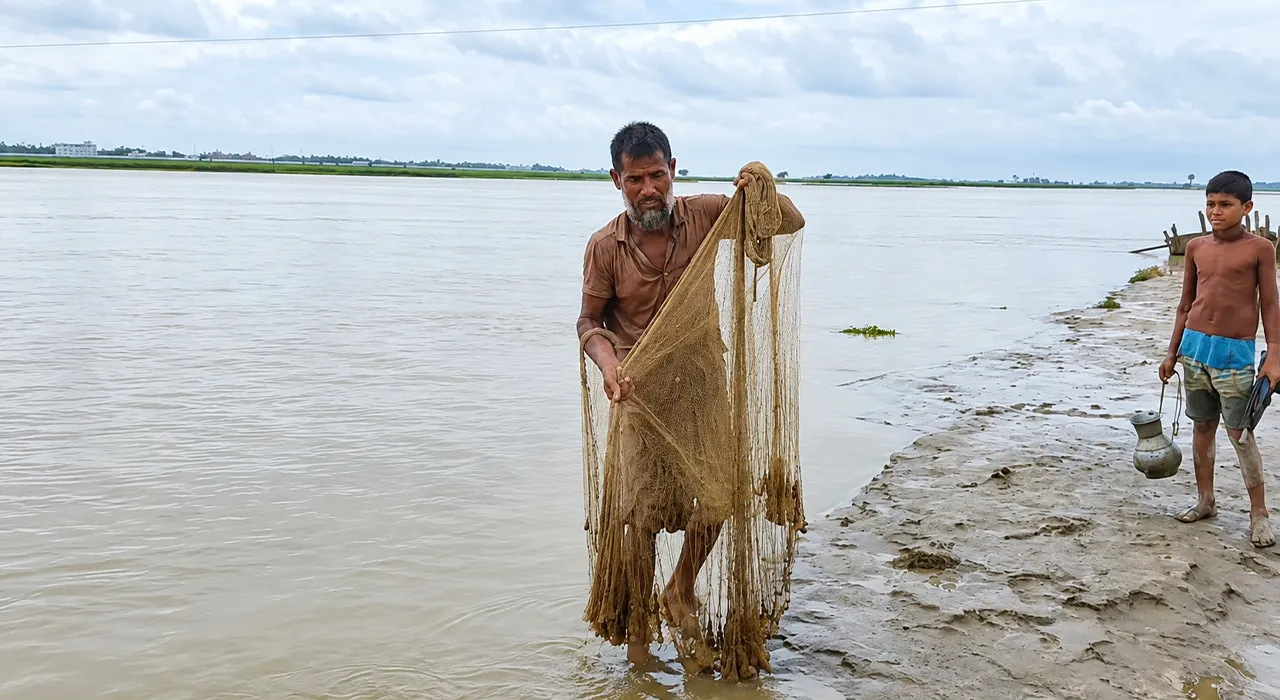
Falling water levels in the Teesta River have caused sandbars to emerge in various sections, with large stretches of sand visible in some areas. The decline in water has put the livelihoods of fishermen dependent on the river at serious risk.
In many places, fishermen are unable to cast their nets because of the shallow water. As a result, they are returning home each day with far less fish than before, making it increasingly difficult to meet household expenses.
Less water means fewer fish
The Teesta comes alive during the monsoon. As the water level rises, various species of fish become more abundant, allowing fishermen to earn a living by selling their catch. However, this seasonal relief does not last long. During the dry season, many fishermen are forced to work as agricultural labourers or day labourers to support their families.
Fishermen including Shafiqul Islam, 55, of Votmari Union in Kaliganj upazila, and Montu Mia of Kashiram Munsir Bazar, have depended on fishing in the Teesta for years.
A recent visit to the Teesta bank near Kashiram Munsir Bazar in Tushbhandar Union found fishermen casting pakjal and saf nets in the river. During the monsoon, increased water and fish availability create more work for them. The fish they catch are sold in local markets, providing income for their families.
According to the fishermen, Bairali fish caught in the Teesta can sell for around Tk 700–800 per kilogram, while puti fish can fetch up to Tk 200 per kilogram. Daily income, however, depends on the quantity and type of fish caught as well as market prices.
Fisherman Shafiqul Mia said that when there is sufficient water in the river during the monsoon, fish are available and they can earn enough to support their families.
Another fisherman, Montu Mia, said that during the dry season, water levels fall sharply and sandbars emerge in many parts of the river. With less water, fish also become scarce, meaning that even after spending a day fishing, they often return with very little.
The fishermen said that declining water levels during the dry season reduce fish movement and make fishing increasingly difficult. Even after casting their nets, they often fail to catch the expected amount of fish. The resulting decline in income creates financial hardship for their families.
While rising water levels in the Teesta during the monsoon bring hope and relief to fishermen, the dry season leaves them facing uncertainty, declining income and economic hardship.