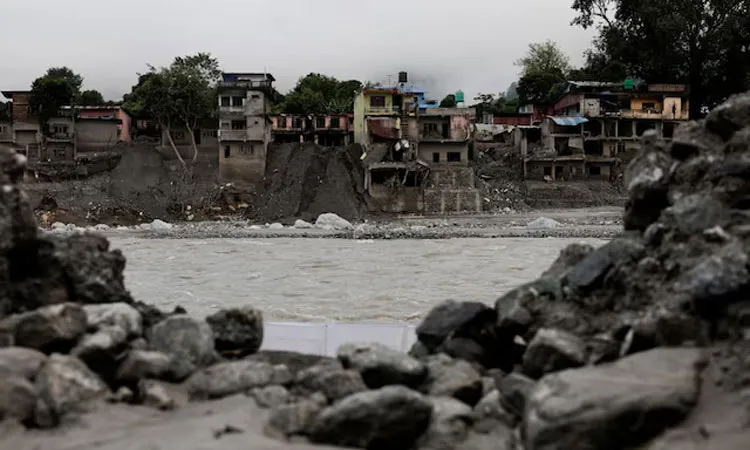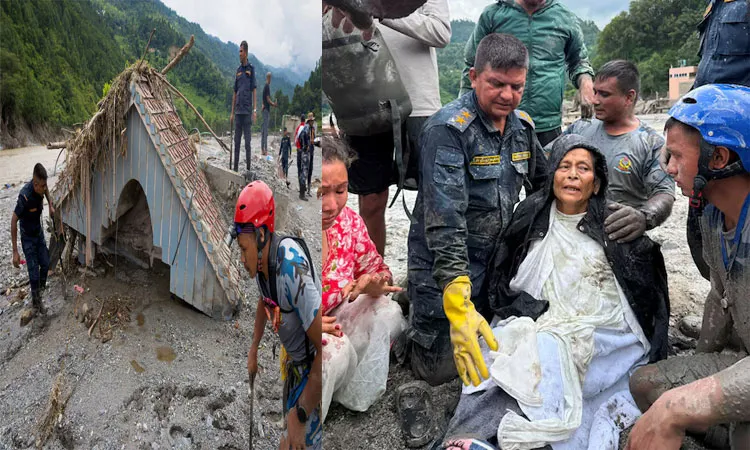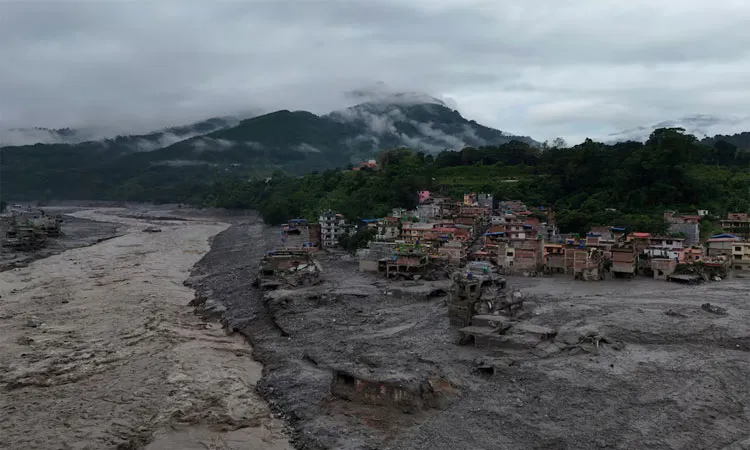
A massive glacial collapse in the Himalayas has left nearly 1,500 people missing across Nepal and Tibet after mud and rock crashed into a river on Wednesday with unleashing catastrophic floods through towns and valleys. Authorities say the death toll is currently at 165 is expected to rise as search operations continue.
In Nepal, 826 people are missing, including nearly 600 foreigners from more than two dozen countries. Among them are 177 Indians, 63 Americans, 34 Australians, 33 Britons and 25 Canadians. In Tibet's Gyirong county, 558 people are missing including 260 foreign nationals as Chinese state media reported.

Many victims were pilgrims traveling to Kailash Mansarovar, a site in Tibet sacred to Hindus and Buddhists. Survivors described entire villages being swept away within minutes. One man told Reuters he lost his wife to the mud after trying to carry her to safety while another said he survived by clinging to a tree.

The U.S. Geological Survey initially reported a 4.4-magnitude earthquake but later clarified that the seismic activity actually came from a glacial rock and ice collapse, not an earthquake. Experts from the Kathmandu-based International Centre for Integrated Mountain Development said an avalanche from a glacier likely triggered the flash flood noting that water levels on the Trishuli river rose sharply within half an hour. Specialists pointed out that the same river the Lhende Khola has now flooded twice in just over a year.

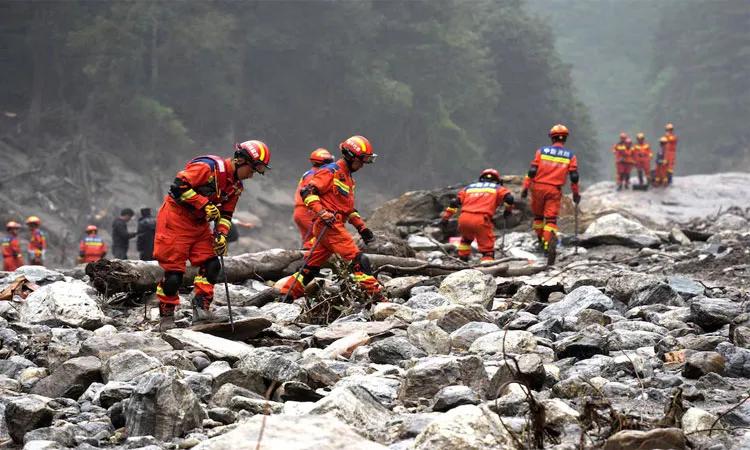
Rescue efforts are underway on both sides of the border. Nepal has deployed over 5,000 army and police personnel using helicopters to reach cut-off communities and deliver food, tents and supplies, some provided by India. More than 100 people were rescued Thursday morning alone with several foreign nationals airlifted to Kathmandu. In Tibet the mud over a meter deep has blocked roads near the Gyirong border crossing, and authorities have identified a newly formed barrier lake upstream that could complicate rescue work further.
International support is arriving. The United States has pledged $500,000 and sent a disaster response adviser. Canada, Australia, and the United Nations have all offered assistance while Malaysia confirmed 55 of its citizens in Kathmandu remain unreachable.
Officials and climate experts warn the disaster reflects a broader pattern: Himalayan glaciers are melting at accelerating rates with ice loss having doubled since 2000. As warming continues, communities across this densely populated mountain region face growing risks from sudden glacial floods and landslides.
Search and rescue operations are expected to continue for days as more bodies are likely to be recovered from the debris.