
- National
- Bangladesh
- Business
- International
- Sports
- Entertainment
- Politics
- Technology
- Life Style
- Religion
- Opinion
Monday, 01 June 2026

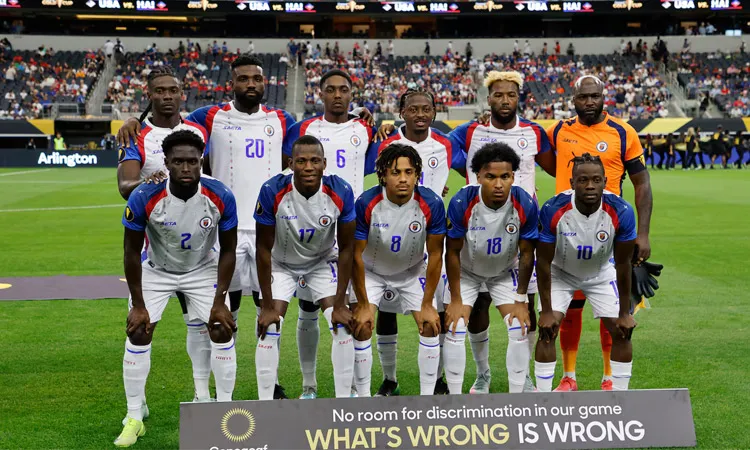
For decades, football fans in Haiti have gathered around televisions and radios to support Brazil during every World Cup. But not this year.
Haiti has qualified for the global tournament for the first time since 1974, sparking nationwide excitement. Spontaneous football matches are erupting on dusty lots, while national team jerseys are selling fast on street corners.
Haiti’s national team known as the "Grenadiers" will begin their campaign in Group C alongside Morocco, Scotland, and their longtime idol, Brazil. They will face the South American giants in Philadelphia on June 19.

"My favorite team is Brazil, but my country is in the World Cup," said 16-year-old Guerier Lima, smiling as he played football on a potholed street in Port-au-Prince. Wearing one sneaker and a plastic slide, with rocks for goalposts, Lima sported a replica Brazil jersey. Yet, his hero is Haiti’s top scorer, Duckens Nazon.
"Brazil is good, but I’m going to stand by my Haitian brothers," Lima said.
For many Haitians, cheering for the team offers a fleeting escape from widespread hunger and a severe surge in gang violence.

Unable to afford a $13 replica shirt, 52-year-old broker Prophète Ismeus bought a $1 plastic bracelet in Haiti’s red-and-blue colors. "I'm showing my support the best way I can," he said. "I’m hoping Haiti will beat Brazil."
Fitho Joseph, a street vendor selling replica shirts, stopped supporting Brazil the moment Haiti qualified. Another fan, 33-year-old Wilkerson Daromain, views the jerseys as a symbol of national resilience.
"Wearing the jersey is a message of hope. We are living in very difficult circumstances, but the Grenadiers have given us hope, and we must give them hope too," Daromain said.
The fans' rallying cry, "Grenadye, alaso!" ("Troops, attack!"), dates back to the revolutionary era when Haiti became the world's first Black republic. For 15-year-old Mario Etienne, seeing his country in the World Cup is a first. "This is a national gathering," he said. "If there’s no power, I will be somewhere on the street or at a friend’s house watching it."
Haitians have revered Brazil since the 1982 World Cup. This bond deepened in 2004 when Brazil led a UN peacekeeping force in Haiti, organizing a "game for peace" that featured football legends like Ronaldo and Roberto Carlos. Though Haiti lost 6-0, locals joyfully celebrated and waved Brazilian flags.
Now, loyalties have temporarily shifted. Street vendor Yvenson Luxama expects Haiti to attack Brazil "like a tiger," though he admits he will nervously close his eyes when Brazil counterattacks.

However, the World Cup offers little distraction for some. Jean-Paul Jean Pierre, a 29-year-old selling team shirts, feels no emotional connection to the games. Displaced by gang violence and living in a cramped, makeshift shelter with his family, his focus is purely on survival.
"Making money, that’s what interests me," he said. "I wish there was a World Cup every year, so that I can continue to survive."
