The United States and Canada failed to reach a trade deal late Friday with prompting Washington to impose 50% tariffs on select Canadian imports a sharp escalation between the two longtime allies.
A senior Trump administration official said the Section 338 tariffs with covering about $20 billion in Canadian goods also took effect just after midnight Saturday.
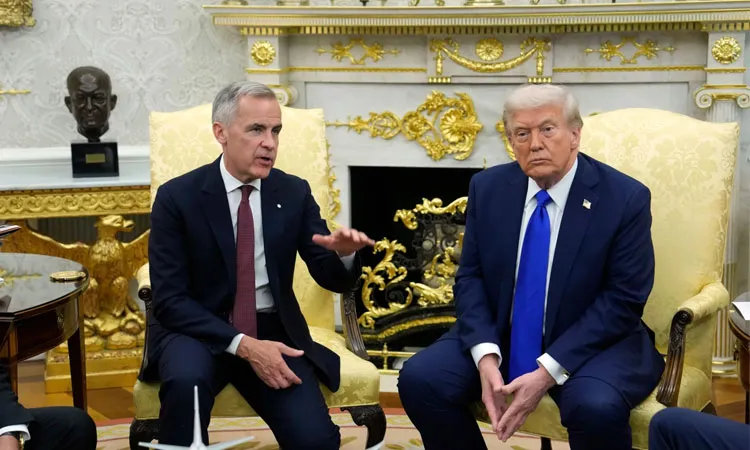
Canadian Prime Minister Mark Carney announced he had suspended trade negotiations and ordered Canada's team back to Ottawa. He vowed Canada would retaliate "dollar for dollar."
The breakdown followed three days of talks in Washington between Canada's trade minister Dominic LeBlanc and U.S. Trade Representative Jamieson Greer.
"They have worked hard in good faith to defend the interests of Canadians throughout these negotiations up until the very last minute," Carney said in a statement. He added that last-minute changes to U.S. terms were "unfair, uneconomic" and undermined trust in any future deal.
Though the new tariffs cover a relatively small share of Canadian exports, they compound existing U.S. duties on steel, lumber and autos. Analysts warn the move could derail Canada's fragile economic recovery and complicate broader free-trade talks between the two countries in the months ahead.
Notably, the tariffs apply even to goods that qualify for preferential treatment under the U.S.-Mexico-Canada Agreement (USMCA) a pact that had previously shielded much of Canadian industry from earlier tariff rounds.
The collapse marks the first real-world use of Section 338 of the Tariff Act of 1930, a rarely invoked law allowing tariffs of up to 50% on countries deemed to discriminate against U.S. trade.