Tesla and eight other automakers have announced the recall of approximately 4.3 million vehicles in China. This marks the country's largest automotive recall to date with driven by safety concerns that concealed door handles could trap passengers during emergencies.
The recall targets emergency mechanical door releases that are difficult to locate or operate if a vehicle's electrical system fails after a crash. The defect has faced intense regulatory scrutiny following recent incidents including a fatal crash involving a Xiaomi sedan in October where bystanders were unable to open the doors to rescue the trapped driver from a fire.
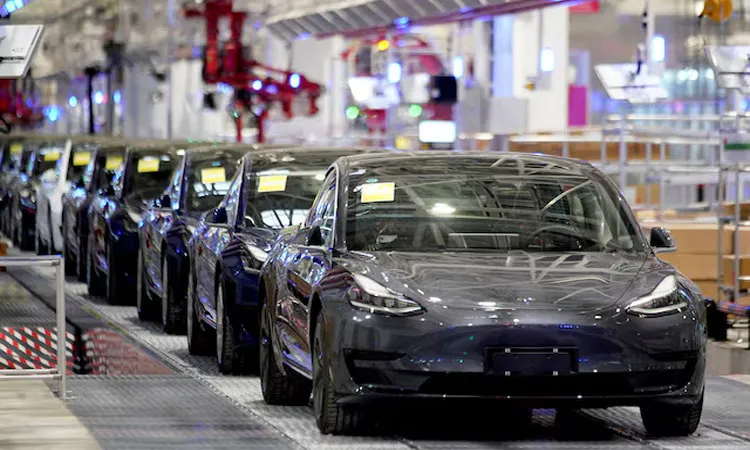
Tesla accounts for the largest share of the recall, pulling back 2.98 million locally made and imported Model 3, Model Y, Model S and Model X vehicles. Other major electric vehicle (EV) manufacturers involved include Xiaomi (390,000 units), Leapmotor (371,000), Xpeng (264,000) and Geely.
To resolve the issue the automakers will install physical warning labels to clearly identify emergency handles and deploy over-the-air (OTA) software updates. For instance, Tesla's software update will automatically lower the windows following a collision also ensuring passengers can escape or rescuers can access the cabin. Industry analysts note that relying heavily on remote updates will keep the overall cost of this massive recall relatively low.
As the EV market expands the Chinese regulators are enforcing stricter safety standards. Beijing has also announced a ban on concealed door handles starting in 2027 also making China the first nation to phase out the design popularized by Tesla and widely adopted by domestic EV makers.
The issue has broader international implications as US traffic safety regulators are now considering similar standards to address the risk of occupant entrapment during electrical failures.