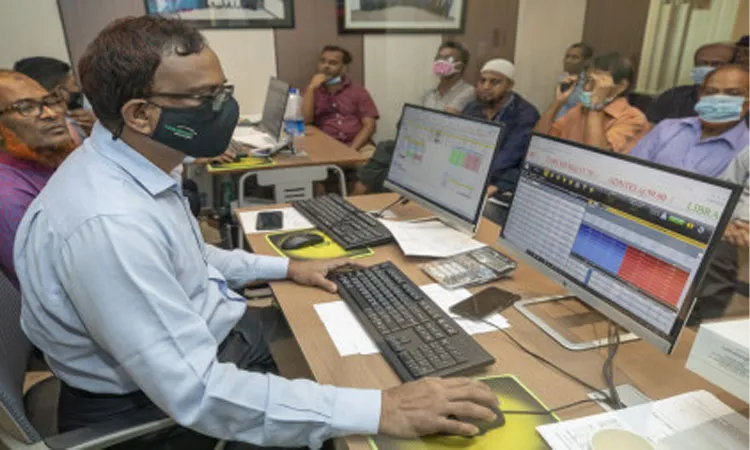
For more than a decade, the economy of Bangladesh has had an arduous journey towards stock market development, an engine of economic growth. The stock market has been stuck in neutral, with the DSE index averaging 5550 since 2017. Eventually, it has become a place where ordinary citizens are afraid to invest, big companies are skeptical about listing and foreign investors simply stay away.
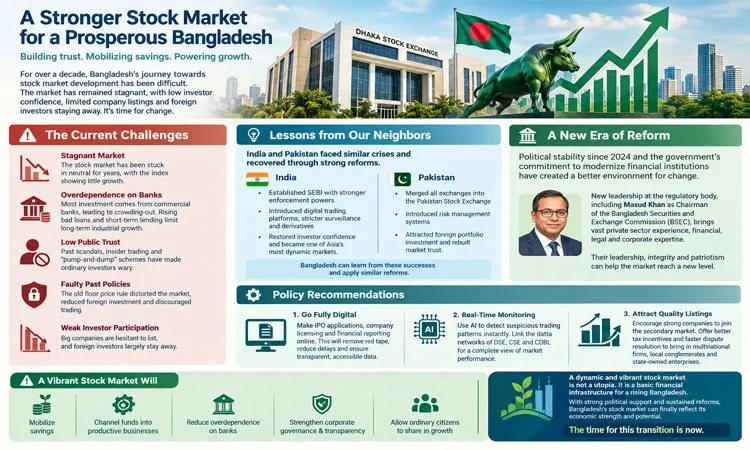
At present, the country’s investment largely comes from commercial banks, leading to significant crowding-out. Although bad loans are increasing day by day, bank loans facilitate short-term needs, rather than long-term industrial projects. However, such overdependency on the banking sector makes it vulnerable to boosting the economy further. On the other hand, a well-organized stock market is the primary engine to drive investments across the globe.
In any economy, a vibrant capital market serves not only to trade shares but also to finance the nation’s future. Among the major functions of a stock exchange are mobilizing savings, channeling funds into productive businesses, and reducing over dependence on banks. It also strengthens corporate governance, improves transparency, and allows ordinary citizens to participate in the country’s growth. Without a strong capital market, Bangladesh will fail to achieve its long-term growth and the Sustainable Development Goals (SDGs). An established, trustworthy stock market can channel local public savings into major national projects such as renewable energy, technology startups, and vital infrastructure.
The political changes since 2024 have created a new environment for reform. The economy is now going through a more politically stable period compared to earlier years. Moreover, the current government has signaled its intent to modernize financial institutions.
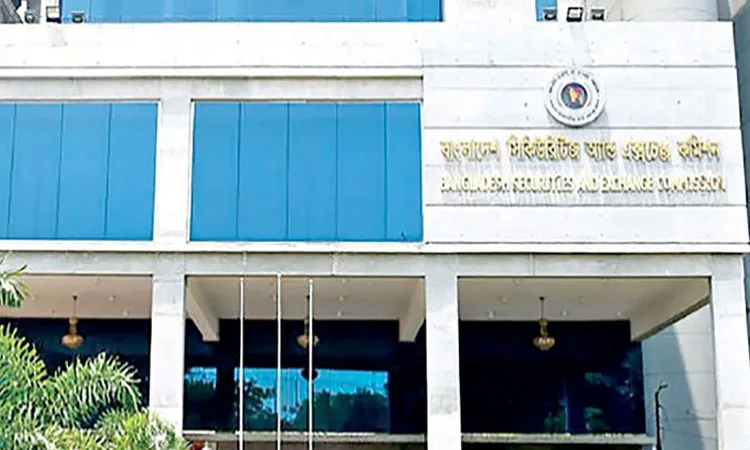
Nevertheless, apart from the change in political leadership, the country’s investors can be hopeful following the ongoing reforms in different sectors and the appointment of new leadership at the regulatory body. Recently, the Ministry of Finance appointed Masud Khan as the new Chairman of the Bangladesh Securities and Exchange Commission (BSEC). He has over 45 years of experience in the private sector, including with companies such as British American Tobacco, Unilever Consumer Care, and LafargeHolcim. The other three new commissioners have financial, legal, and corporate backgrounds. Such a professional background, combined with their leadership experiences, integrity and patriotism, may lead the stock market to a new.
Understanding the Past Crisis
To fix the market, it is important to understand why it broke down in the past. For many years, ordinary investors felt the market was rigged as the trust was inadequate. Issues like insider trading, where people with private information make unfair profits, have made many investors wary of the market. Moreover, "pump-and-dump" schemes, in which share prices are artificially inflated and then crashed, destroyed public trust.
Making matters worse, past regulators tried to "fix" the declining price trend by introducing a "floor price" rule (setting a minimum price below which a stock cannot be sold). Although it was targeted to protect investors, it did not work properly. Because no one wanted to buy overvalued shares, foreign asset managers panicked. If an international investor cannot easily sell a stock and withdraw their money when they need to, they usually take their capital to another country.
Learning from Our Neighbors
Nevertheless, Bangladesh is not alone in facing capital market crises. Among the SAARC countries, India and Pakistan have gone through the recent stock market crisis. However, they have successfully recovered their markets through various reform measures. For instance, after the Harshad Mehta scandal in 1992, India established the Securities and Exchange Board of India (SEBI), which was given stronger enforcement powers. India’s market has been one of Asia’s most dynamic and vibrant markets by establishing digital trading platforms, stricter surveillance, and the introduction of derivatives. Similarly, following a severe market collapse in 2008, Pakistan reorganized its Karachi Stock Exchange. All the stock markets were merged into the Pakistan Stock Exchange, and risk management systems were introduced. Consequently, such reforms restored investor confidence and attracted foreign portfolio investment. Bangladesh can learn from these successes of the neigbours.
Policy Recommendations
Chairman Masud Khan has already laid out a clear, practical roadmap to make a significant change by bringing the investors’ confidence back in the market. As his opening press conference speech made clear, the regulator’s job is not to artificially control stock prices, but to ensure a clean, fair environment where prices move naturally based on market forces. Echoing to the new chairman, some steps can make the market vibrant and profitable for all the stakeholders.
Three things are important in this context.
1. From IPO applications to company licensing and financial reporting should be completely online. This will remove bureaucratic red tape, reduce unexpected delays, and make company data transparent and accessible to everyone.
2. Real-Time Monitoring based on artificial intelligence (AI) is important to track suspicious trading patterns instantly. By linking the data networks of the Dhaka Stock Exchange (DSE), the Chittagong Stock Exchange (CSE), and the Central Depository (CDBL), the regulator can gain a holistic understanding of market performance.
3. Encouraging stronger companies to get enlisted in the secondary market can play a vital role in boosting the market. Currently, the market has many low-performing, unstable companies with lower secondary-market valuations. Eventually, the stock market increasingly needs high-quality, stable companies. Offering better tax incentives and faster dispute resolution to convince multinational companies, strong local conglomerates and state-owned enterprises to list their shares on the market can be an effective policy in this regard.
A dynamic and vibrant stock market is not a utopia. It is a basic financial infrastructure that an emerging economy like Bangladesh needs to survive and prosper. If these reforms are carried out with strong political support, Bangladesh’s stock market can finally become what it was always meant to be. It will reflect Bangladesh's economic strength and potential. It is high time for that transition to take place.
Writers: 1. Dr. Zobayer Ahmed is an Associate Professor at the Bangladesh Institute of Governance and Management (BIGM). 2. Tasfia Tasneem Ahmed is an Assistant Professor at the Bangladesh Institute of Governance and Management (BIGM).