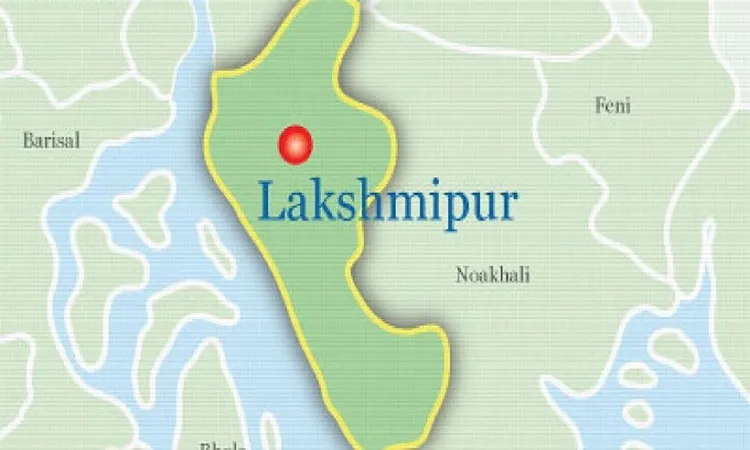
Laxmipur is the home to more than 2 million people has no government Institute of Health Technology (IHT) despite a rapidly growing healthcare system that increasingly depends on trained medical technologists. As hospitals, clinics and diagnostic centers multiply across the district, local students are left with no institution to train them for these very jobs.
A Growing Health Infrastructure
According to the 2022 census by the Bangladesh Bureau of Statistics, Laxmipur's population stands at 20,37,948. The district's public health network includes one district hospital, four upazila health complexes, one 20-bed hospital, 180 community clinics and several union-level health centers a substantial system built to serve millions.
150 Diagnostic Centers, But No Training Ground
Government data shows 150 registered "Consultancy & Diagnostic Centers" across Laxmipur's five upazilas: 80 in Laxmipur Sadar, 28 in Ramganj, 19 in Kamalnagar, 14 in Raipur and 9 in Ramgati. These centers offer laboratory, radiology, and imaging services all of which require skilled technicians in fields like medical laboratory science, radiography and physiotherapy.
Yet there is no local institution to produce this workforce.
Government IHTs Exist Elsewhere Just Not Here
The Department of Health runs IHT and MATS (Medical Assistant Training School) admission programs nationwide, offering training in laboratory science, radiology, radiography, physiotherapy, pharmacy, dentistry, radiotherapy and operation theatre assistance. Government IHTs currently operate in districts including Chittagong, Barisal, Gopalganj, Madaripur, Manikganj, Jhenaidah, Bogra, Rajshahi, Rangpur and Kurigram.
Laxmipur, despite its size and healthcare needs also remains absent from this list.
Students Facing Extra Burden
In the 2026 SSC and equivalent examinations 13,410 students from Laxmipur appeared with 8,570 passing drawn from 181 educational institutions across the district. While exact figures for science-stream students weren't available in published results, it's clear that many aspiring health technologists must leave Laxmipur to pursue this specialized education elsewhere.
This adds significant financial strain covering accommodation, transportation and daily expenses particularly burdening students from low-income and lower-middle-class families.
Why This Matters for Healthcare Quality
An IHT isn't just an academic institution it's the backbone of skilled human resources for the health sector. Diagnosis and treatment in hospitals, health complexes and diagnostic centers heavily depend on trained technicians in laboratory work, radiography and physiotherapy.
While the government's HRM Facility Registry tracks positions such as Medical Technologist (Lab), Radiography, Physiotherapy and Dental roles, comprehensive district-level data on approved, filled and vacant posts in Laxmipur isn't readily available in one place. This gap makes it difficult to fully assess the scale of the manpower shortage but the need is evident.
Beyond Education: An Employment Opportunity
Establishing a government IHT in Laxmipur would open new education and employment pathways for local youth especially women who could train in laboratory science, radiology or physiotherapy and later work in government or private health institutions.
Such an institution would also allow the local health sector to draw trained professionals from within the district itself by reducing dependency on technicians from other regions.
The Case for a Feasibility Study
Given the district's population size the existing health infrastructure with the presence of 150 diagnostic centers and clear student demand, there's a strong case for a feasibility study to assess whether a government IHT should be established in Laxmipur. Experts suggest starting with core specializations medical laboratory science, radiology & imaging and physiotherapy before expanding into other health technology fields.
The central question remains, if Laxmipur's 2 million residents require a district hospital, four upazila health complexes, and 150 diagnostic centers why does the district lack an institution to train the skilled technicians these facilities depend on?
Establishing a government IHT in Laxmipur isn't merely about expanding higher education access it's about strengthening healthcare quality, building a skilled local workforce also empowering women through employment and securing the future capacity of the district's health sector.