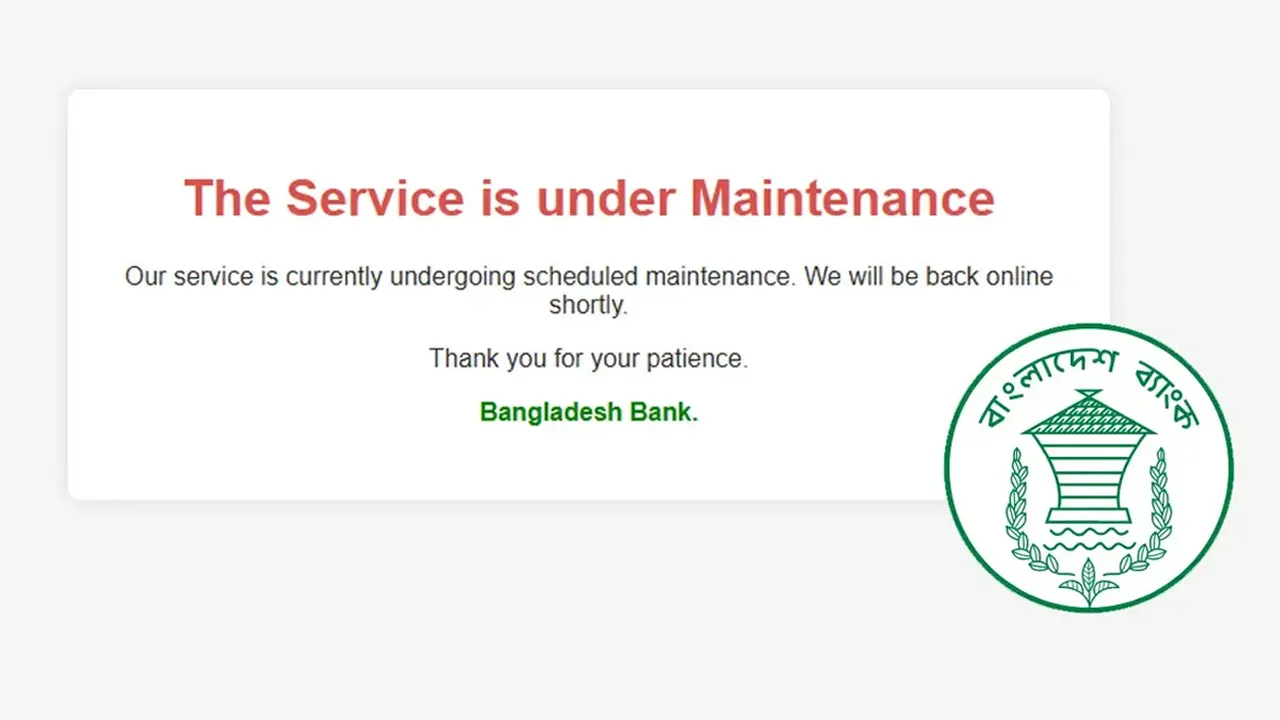
Bangladesh Bank’s website has been temporarily shut down as a precautionary measure to address an urgent cybersecurity risk. The decision was taken amid concerns about potential attacks exploiting security vulnerabilities in the PHP programming language. However, there is no confirmed information yet on whether the website has been subjected to a cyberattack.
The central bank’s website was inaccessible on Thursday (October 22). Sources at Bangladesh Bank said work was underway to identify and fix security weaknesses. The website will be restored after the risks have been assessed and the necessary safeguards put in place.
Arif Hossain Khan, executive director and spokesperson for Bangladesh Bank, told the media that the website had been taken offline because of an urgent security issue. He said the move was a precautionary measure to prevent potential security threats.
According to relevant sources and reports in international media, two serious security vulnerabilities in the PHP programming language have triggered warnings worldwide. Potential attackers could exploit these flaws to execute unauthorised instructions on servers remotely.
If such vulnerabilities are exploited, server files, databases and sensitive information could be exposed to risk. Institutions are therefore taking precautionary steps to assess potential threats and strengthen their security measures.
Besides Bangladesh Bank, several other banks and organisations using PHP-based websites have reportedly taken precautionary measures. However, it has not been confirmed whether anyone has exploited the vulnerabilities in question to attack Bangladesh Bank’s website.
PHP is a widely used server-side programming language. It supports websites and online services operated by government agencies, news organisations, e-commerce platforms and other service providers around the world.
However, using PHP does not automatically make a website vulnerable. The level of risk depends on factors including the version in use, security updates, server configuration and other protective measures.
Cybersecurity experts say that, in such situations, organisations should identify the PHP version running on their servers and apply the necessary security updates. If the vulnerabilities cannot be fixed immediately, additional measures may include deploying firewalls, restricting unauthorised connections and, if necessary, temporarily disconnecting servers from the internet.
The shutdown may temporarily disrupt access to information and online services provided through Bangladesh Bank’s website. No specific timeline has been announced for restoring the site.
Relevant sources said a decision on reopening the website would be made only after the security vulnerabilities have been identified and the necessary safeguards have been implemented.