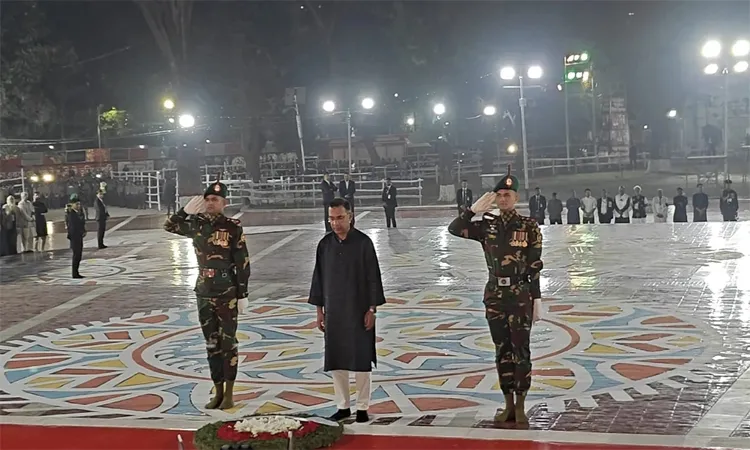
Today, February 21, Bangladesh observes Great Martyrs’ Day and International Mother Language Day, remembering the brave sons of Bengal who gave their lives in 1952 to defend the dignity of the mother tongue.
In the first hour of the day, President Mohammed Shahabuddin and Prime Minister Tarique Rahman paid tribute to the martyrs by placing a wreath at the Central Shaheed Minar in Dhaka. He stood in silence to honour their sacrifice. Senior government officials and party leaders were also present, expressing respect for the martyrs and capturing the spirit of Ekushey.

On this day of Palash and Shimul blossoms, the nation recalls the words: “Ekushey February, stained with my brother’s blood—can I ever forget?” The police firing on unarmed students demanding Bangla as a state language marked a historic turning point, laying the foundation for linguistic rights and national identity.

This year marks the 74th anniversary of the Language Movement. Martyrs including Salam, Barkat, Rafiq, Shafiur, and Jabbar gave their lives to protect Bangla. In recognition of their sacrifice, February 21 is now observed worldwide as International Mother Language Day.
The day began with wreaths at the Central Shaheed Minar. Across the country, political, social, and cultural organisations held programmes such as wearing black badges, early-morning processions, discussions, and cultural events.
Ekushey February is both a day of mourning and pride. The nation renews its pledge to honour the language martyrs and uphold the dignity of the Bengali language. It is a public holiday, and the national flag is flown at half-mast at sunrise at all government, semi-government, autonomous, educational, and private institutions, alongside black flags.
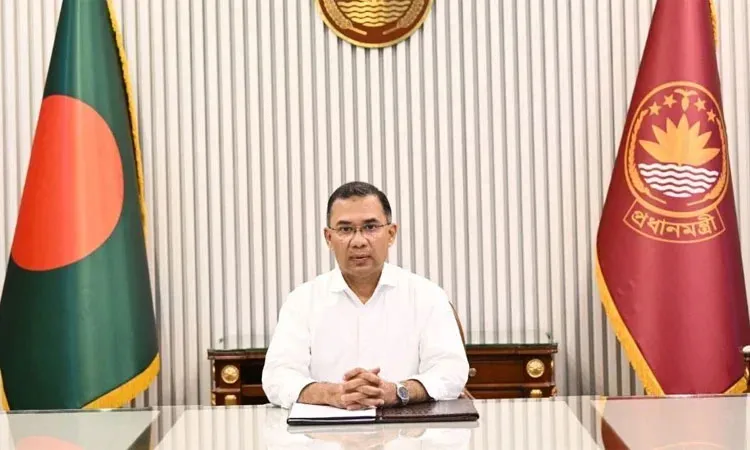
President Md Sahabuddin and Prime Minister Tarique Rahman issued separate messages, paying tribute to the martyrs and emphasising the importance of protecting mother languages.
History of the Language Movement The first protests demanding Bangla as a state language began in Dhaka in late 1947. The movement gained momentum in March 1948 and reached its peak on February 21, 1952, when Dhaka University students defied Section 144 and took to the streets. Police opened fire, killing several students.
Public protests continued on February 22. Funeral prayers were held at the Dhaka Medical College Hostel, and a temporary monument was built overnight on February 23, though it was later demolished by authorities.
The movement ultimately succeeded. After the United Front’s election victory in 1954, Bangla was recognised as a state language of Pakistan in 1956. The Bangla Language Implementation Act passed in 1987 ensured its official use in government affairs.
International Mother Language Day In 1998, expatriate Bengalis Rafiqul Islam and Abdus Salam proposed to the United Nations that February 21 be recognised globally as International Mother Language Day. Their initiative gained international support and was formally adopted by UNESCO on November 17, 1999.
Since February 21, 2000, the day has been observed worldwide. In 2010, the United Nations General Assembly unanimously endorsed its annual observance, following Bangladesh’s proposal.