- National
- Bangladesh
- Business
- International
- Sports
- Entertainment
- Politics
- Technology
- Life Style
- Religion
- Opinion
- FIFA World Cup 2026
Monday, 17 August 2026


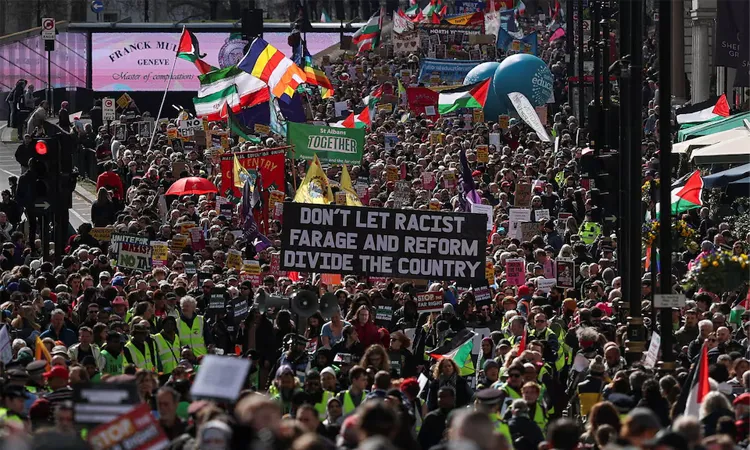
Large-scale “No Kings” protests have erupted across the United States and several countries worldwide, targeting the policies of President Donald Trump and his administration.
Organisers say more than 3,100–3,200 events have been planned across all 50 states, with participation expected to exceed 9 million people—potentially making it one of the largest single-day protests in U.S. history.

In Washington, D.C., hundreds marched from the Lincoln Memorial to the National Mall, chanting slogans like “No kings” and carrying anti-government placards.
The protests were driven by multiple grievances, including strict immigration enforcement, the ongoing conflict involving Iran, and the rollback of transgender rights. Minnesota has emerged as the focal point of the movement, with a major rally planned at the state capitol in St. Paul.

High-profile figures including Bruce Springsteen and Joan Baez are expected to headline the Minnesota rally, which could draw over 100,000 participants. Political figures such as Bernie Sanders are also set to attend.
The protests follow rising tensions over federal immigration actions, particularly in Minnesota, where incidents involving federal agents have intensified public anger.

Internationally, demonstrations have taken place in cities like Paris, Rome, and London, with protesters voicing opposition to U.S. foreign policy, including strikes linked to the Iran conflict, and broader concerns over global instability.
Organisers, including advocacy group Indivisible, said participation is growing beyond traditional urban strongholds, with strong turnout expected from suburban and conservative-leaning states.

The White House dismissed the protests, calling them politically motivated and lacking widespread support. Republican leaders also criticised the rallies.
Despite political pushback, organisers say the movement reflects growing dissatisfaction across diverse voter groups and could signal broader national unrest.