


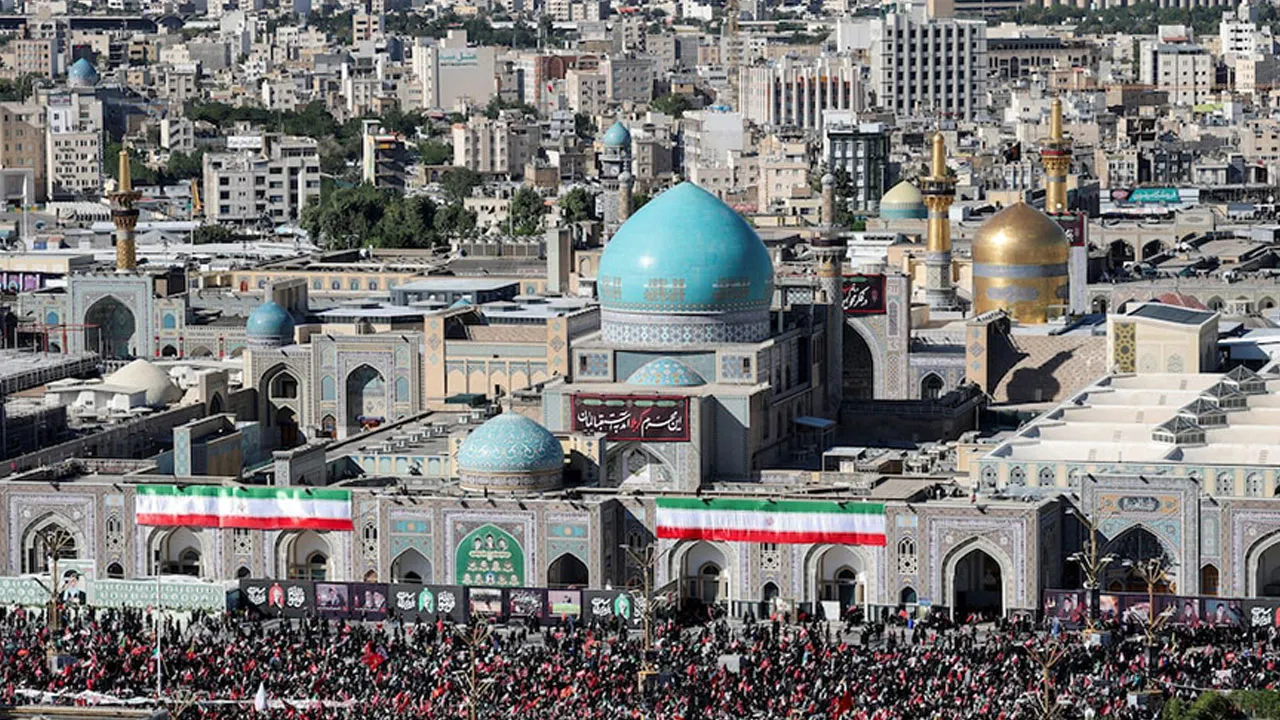
Iran buried its late Supreme Leader, Ayatollah Ali Khamenei, in the holy city of Mashhad on Thursday, marking the end of a week-long national mourning period. Massive crowds gathered at the Shrine of Imam Reza for the final ceremony, which followed a series of funeral processions across Iran and Iraq.
Khamenei was killed on February 28, 2026, in airstrikes conducted by the United States and Israel. While the state utilized the funeral to project ideological strength, a significant shadow hung over the event: the continued absence of his successor.
Mojtaba Khamenei, the late leader’s son, was proclaimed the new Supreme Leader in early March but has not been seen in public since the war began. Official sources indicate that Mojtaba suffered severe injuries in the same strike that killed his father and is currently recovering. Security concerns regarding potential further attacks have also kept him in hiding.
The burial took place against a backdrop of heightened tensions. Mourners at the shrine chanted "Death to America" and displayed placards calling for the death of U.S. President Donald Trump. Khamenei’s 37-year rule was defined by the consolidation of power within his office and the rising influence of the Islamic Revolutionary Guard Corps. As the nation transitions, it faces severe internal challenges, including a sanctioned economy and a history of suppressed domestic unrest. With Mojtaba’s leadership supported by the Guards, the future of Iran’s strategic direction remains under intense scrutiny.

