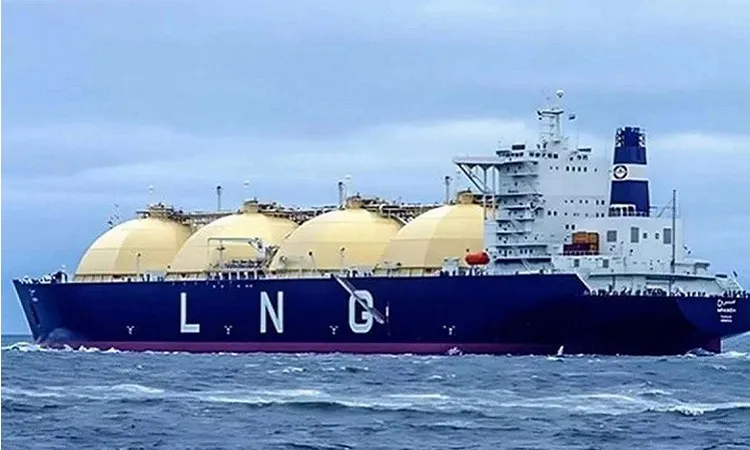
Global energy tensions in the Middle East have recently strained Bangladesh's fuel supply, particularly for import-dependent Liquefied Natural Gas (LNG) and Liquefied Petroleum Gas (LPG). However, as international markets stabilize following a recent ceasefire, government agencies are ramping up imports to normalize the domestic supply.
At least five fuel-carrying vessels are scheduled to arrive in the country by April 15. Officials believe this steady influx will alleviate pressure on the national power grid and gas distribution networks, benefiting both industrial and domestic sectors.
A mixture of propane and butane used primarily for cooking in homes and restaurants, and as vehicle fuel (Autogas). It is the vital energy source for areas lacking piped gas connections.
Supercooled natural gas used to fire power plants and heavy industries like fertilizer, textiles, and ceramics. It is also increasingly used as fuel for international maritime vessels and long-haul trucks.
The influx began on April 10, when the Morning Jelly arrived at Chittagong Port from Malaysia with 2,470 tons of LPG. Simultaneously, the vessel EMEI docked at the Maheshkhali floating terminal with 69,000 tons of LNG from the United States.
The schedule for the coming days includes April 11 The Kongtong arrived from the USA with a similar LNG load. April 13 The vessel Paul is expected at Chittagong outer anchorage with LPG from Malaysia. April 15 The Maran Gas Hydra is slated to arrive with 64,678 tons of LNG from Australia.
Chittagong Port Authority Secretary, Syed Refat Hamim, confirmed that fuel tankers are being given top priority for berthing to ensure uninterrupted supply.
The recent arrivals follow the docking of the MT Central Star (26,000 tons of octane) and the Eastern Queens (fuel oil) earlier this week. In total, nine LNG shipments are scheduled for April.
Engineer Mohammad Saifullah Kabir, Deputy General Manager of RPGCL (LNG), noted that two LNG ships have already begun unloading. With each ship carrying roughly 70,000 tons, the continuous supply is expected to bring significant relief to power generation and industrial operations.
Experts suggest that if global market stability holds, Bangladesh’s energy situation will continue to improve through the coming months.