
- National
- Bangladesh
- Business
- International
- Sports
- Entertainment
- Politics
- Technology
- Life Style
- Religion
- Opinion
Wednesday, 03 June 2026

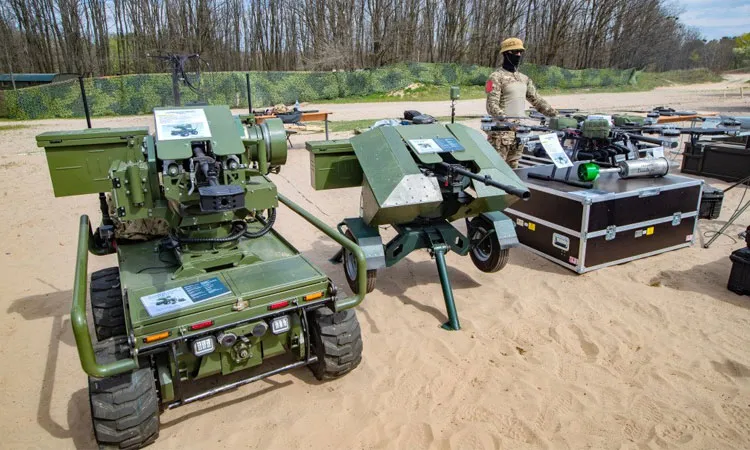
Unmanned ground vehicles (UGVs), or combat robots, are rapidly transforming battlefield operations in the ongoing Russia-Ukraine War, offering Ukraine a tactical edge while reducing risks to soldiers.
Developed and deployed at scale since 2024, these battery-powered land robots are now widely used for logistics, combat and evacuation. According to Ukrainian military officials, they currently handle up to 90% of frontline logistics, delivering food, ammunition and supplies, as well as evacuating wounded troops from high-risk zones.

The war has evolved into a high-tech contest dominated by drones and robotic systems, replacing traditional reliance on heavy armour. Ukrainian forces are increasingly deploying armed ground robots equipped with machine guns, grenade launchers and even explosives. In one instance, a kamikaze robot successfully destroyed a Russian position after travelling 20km.

Military experts say the use of robotics is reshaping modern warfare. Ukrainian units, including the 3rd Army Corps, have pioneered training and deployment systems, with specialised academies preparing operators for remote combat. The country has also become a hub for unmanned weapons innovation, combining frontline feedback with rapid manufacturing.

President Volodymyr Zelenskyy has highlighted Ukraine’s growing defence technology exports, including drone interceptors, amid rising global demand. Meanwhile, Defence Minister Mykhailo Fedorov said robots now routinely operate in dangerous areas where deploying soldiers would be too risky.
Despite losses from Russian attacks, Ukrainian officials say the cost of losing robots is far lower than human casualties. With Russia controlling about 20% of Ukrainian territory, both sides are increasingly investing in robotic warfare systems.
Analysts suggest that ground-based robotic systems could soon replace a significant portion of human roles in both logistics and combat, marking a major shift in the future of warfare.
