
- National
- Bangladesh
- Business
- International
- Sports
- Entertainment
- Politics
- Technology
- Life Style
- Religion
- Opinion
- FIFA World Cup 2026
Wednesday, 22 July 2026

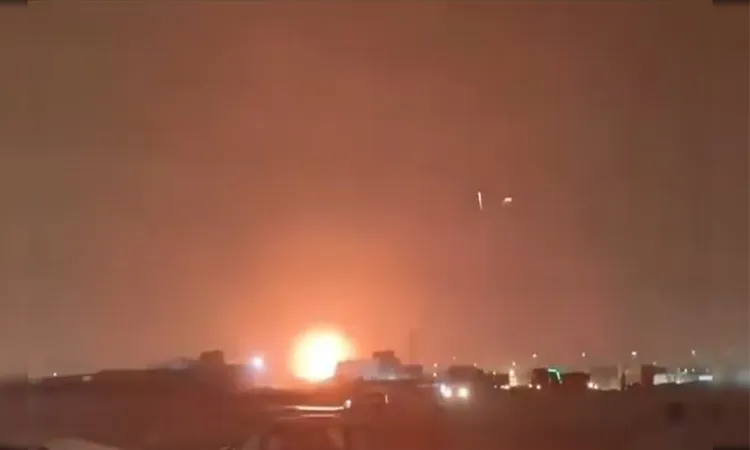
US President Donald Trump has said he advised Israel not to carry out further attacks on Iran’s energy infrastructure, as escalating strikes threaten global energy supplies and push up prices.
Speaking at the White House on Thursday, Trump said he told Israeli Prime Minister Benjamin Netanyahu to avoid repeating such attacks. “I told him, ‘Don’t do that,’ and he won’t do that,” Trump said during a meeting with Japanese Prime Minister Sanae Takaichi.
Rising tensions and energy disruption
The remarks came as energy prices surged following a series of retaliatory strikes across the region.
Iran reportedly targeted Qatar’s Ras Laffan Industrial City after Israeli strikes on its South Pars gas field. The facility is a key global hub for liquefied natural gas (LNG), and damage there could take years to repair.
Attacks were also reported on Saudi Arabia’s Red Sea port, a critical export route used to bypass disruptions in the Strait of Hormuz.
Analysts say the strikes highlight the vulnerability of major energy infrastructure and the risk of wider disruption to global supply.
Military stance and uncertainty
Despite reports that the US is considering sending more troops to the Middle East, Trump said he has no plans to deploy ground forces. “I’m not putting troops anywhere,” he said.
US Defence Secretary Pete Hegseth said Washington’s military objectives remain unchanged. However, Director of National Intelligence Tulsi Gabbard indicated differences between US and Israeli goals, particularly regarding targeting Iran’s leadership and military capabilities.
There were also conflicting accounts over coordination. While Trump said the US was unaware of the Israeli strike on the South Pars gas field, Israeli officials reportedly said the operation had been coordinated with Washington.
Global response
Major US allies, including Britain, France, Germany, Italy, the Netherlands, and Japan, expressed readiness to help ensure safe passage through the Strait of Hormuz. However, they did not commit to immediate military involvement.
European leaders signalled caution, with Germany stating any role would come only after the conflict ends.
Economic impact
The escalating conflict has driven sharp increases in global energy prices. Brent crude rose to around $110 per barrel, while European gas prices jumped significantly.
The market reaction has raised concerns about inflation and economic stability. Global stock markets fell, and central banks signalled caution on interest rate changes.
Expanding conflict
Iran warned that further attacks on its energy facilities would trigger continued retaliation against US-linked and allied infrastructure.
Reports indicate that strikes have already disrupted energy operations in several countries, including the UAE and Kuwait.
With no clear end to the conflict, concerns are growing over a prolonged energy crisis and its global economic impact.
