A powerful 7.8-magnitude earthquake struck off the southern coast of the Philippines on Monday morning, killing at least 32 people, injuring more than 200 and triggering a tsunami and deadly landslides across Mindanao island.
The quake hit at 7:37 a.m. centered about 32 kilometres southwest of Maasim town in Sarangani province, at a depth of approximately 33 to 55 kilometres varying by agency. It is the strongest earthquake to hit the Philippines this year.
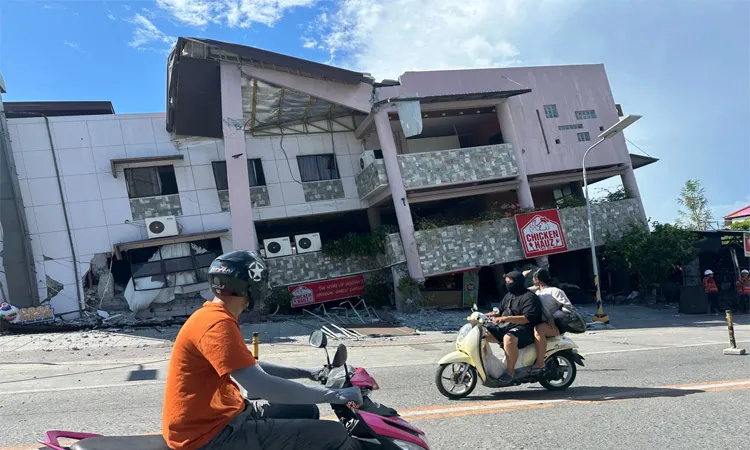
In the port city of General Santos a regional hub for the tuna industry with over 700,000 residents several buildings collapsed including a two-story school where students were reported trapped. The city's international airport was shut and 17 domestic flights cancelled. Seven people died in the city alone.
A landslide in Sarangani province's mountainous town of Glan killed 13 villagers after the quake brought down houses on a hillside. Four others in the province died for reasons still under investigation. Additional deaths were reported due to falling debris, a damaged mosque, and landslides across South Cotabato, Davao Occidental and Balut Island.
Tsunami waves of up to 1.4 metres hit coastal areas of Sultan Kudarat and Sarangani provinces. A tsunami warning was lifted by mid-afternoon, roughly five hours after the quake. Smaller waves were measured in Indonesia, Palau and southern Japan.

President Ferdinand Marcos Jr. cancelled classes nationwide and ordered disaster-response agencies to mobilise immediately. "The national government is moving and we will not leave Mindanao behind," he said.
Aftershocks as strong as 6.5 magnitude followed. Authorities warned residents not to return to damaged buildings without official clearance. The Philippines sits on the Pacific Ring of Fire and regularly experiences earthquakes, typhoons and volcanic activity.