


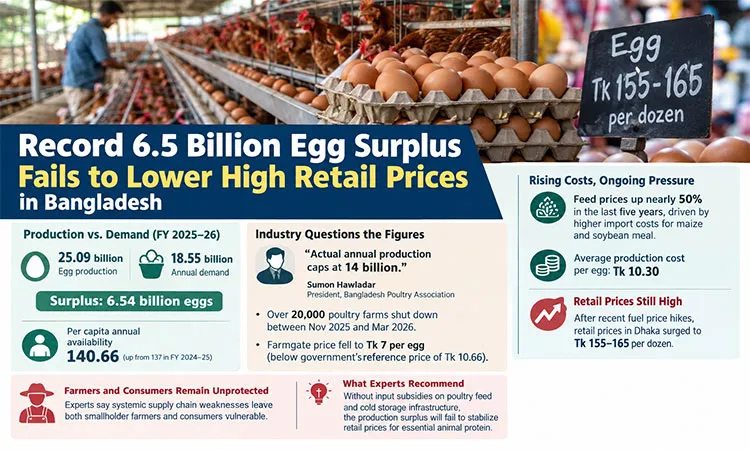
Bangladesh produced a record surplus of 6.54 billion eggs during the 2025–26 fiscal year, yet retail prices remain high for consumers due to structural supply chain failures and soaring input costs.
Data from the Department of Livestock Services (DLS) shows national egg production reached 25.09 billion units against an annual demand of 18.55 billion. Per capita annual egg availability rose to 140.66 up from 137 in the previous fiscal year. However the industry representatives dispute these figures. Sumon Hawladar, president of the Bangladesh Poultry Association, characterized the official statistics as overstated also stating that actual annual production caps at 14 billion. He noted that over 20,000 poultry farms shut down between November 2025 and March 2026 after farmgate prices plummeted to Tk 7 per egg—well below the government-set reference price of Tk 10.66.
Agricultural economists highlight that systemic vulnerabilities leave both smallholder farmers and consumers unprotected. Feed prices have escalated by nearly 50% over the past five years, driven by import costs for maize and soybean meal. Consequently, the average production cost per egg has risen to Tk.10.30.
While farmers face losses during oversupply periods, retail prices spike sharply during supply contractions. Following recent fuel price hikes, retail prices in Dhaka surged to Tk.155–165 per dozen.
Experts emphasize that without input subsidies on poultry feed and cold storage infrastructure, the production surplus will fail to stabilize retail prices for essential animal protein.

