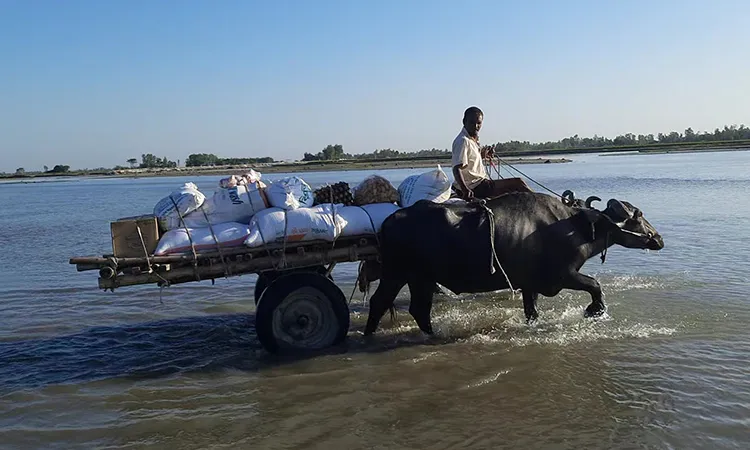
In the remote Teesta River char (riverine island) areas of Kaliganj Lalmonirhat buffalo and horse carts have emerged as an economic lifeline, transforming the rural economy. Often called the "ships of the char" these eco-friendly vehicles easily navigate sandy and muddy trails where trucks vans and rickshaws fail.
Kaliganj’s char villages—including Bairatichar Votmari Shaulmari Kashiram and Kakina—produce a vast share of the upazila's cash crops such as paddy jute potatoes maize and onions. Previously impassable roads forced farmers to sell their harvests to middlemen at heavily discounted prices. Today the introduction of buffalo carts allows farmers to transport produce directly to local markets ensuring fair prices and higher profit margins.
This transportation shift has also sparked a new employment wave. Latif Mia, a cart driver from Bhotmari village reports earning Tk 500 to Tk 700 daily, with earnings peaking during the potato harvest. After spending up to Tk 150 on animal feed, drivers retain a healthy profit. Abdul Hakim a driver from Kakina Union, notes that this profession successfully lifted his family out of poverty.
Local representatives confirm the rapid growth of this sector. Union Parishad Chairmen Farhad Master and Nur Islam note that while these carts were rare just five years ago, hundreds now operate across their jurisdictions. By bridging a vital communication gap, these traditional carts are driving sustainable employment and turning the wheel of fortune for rural families in Lalmonirhat.