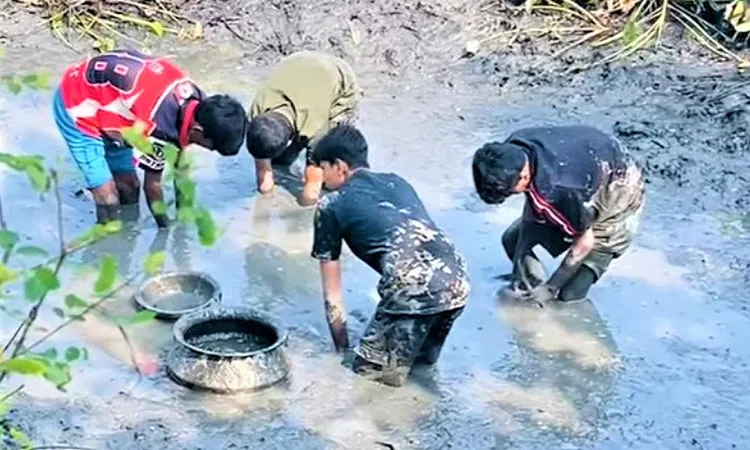
Remember the days when groups of kids would jump into muddy wetlands after a winter drain-off, pulling out buckets of flopping Puti, Taki, Shing and Baim? In Tangail, those quintessential scenes of rural childhood along with the traditional polo traps and jhanki jal cast nets are quickly fading into memory.
While pond-based fish farming is booming across the district, native fish species naturally breeding in rivers, canals and beels (wetlands) are facing a full-blown crisis. A dangerous mix of climate change, unplanned urban expansion, agricultural runoff and widespread use of banned gear like China duari and fine-mesh current jal has pushed dozens of local species to the brink.
A Nostalgic Past vs. A Harsh Reality
In villages like Rouha in Kalihati Upazila or Chapra Beel in Ghatail, you can still occasionally catch teenagers covered in mud, spending hours draining small patches of water to scoop up wild fish. But local elders say these moments are becoming rare.
Veterans recall when Tangail's natural waterways harbored over a hundred vibrant native species. Today, local markets rarely see popular wild catches like Chital, Pabda, Deshi Koi, Rita, Guijja Aor or Baghair. When they do appear, price tags are sky-high, leaving average consumers with no choice but to rely on farmed Pangas, Tilapia or cultivated Rui.

Fishermen Pushed to the Brink
The decline hits the district's fishing communities hardest. Tangail has roughly 30,500 registered fishers and another 20,000 who depend indirectly on open-water fishing. In places like Charan Beel, fishermen report spending entire days casting nets only to come home with barely a kilogram of fish. As a result, generations-old fishing families are abandoning their boats to work as rickshaw pullers or manual laborers.
What’s Being Done?
Tangail District Fisheries Officer Mohammad Shahjahan Kabir noted that 13 fish sanctuaries have been established across the district to protect breeding grounds. However, officials admit much more is needed.
Without large-scale dredging to clear silted canals, strict enforcement against illegal net usage and strong protection against wetland encroachment, Tangail risks losing not just its delicious native fish, but a foundational piece of Bengal's cultural identity.