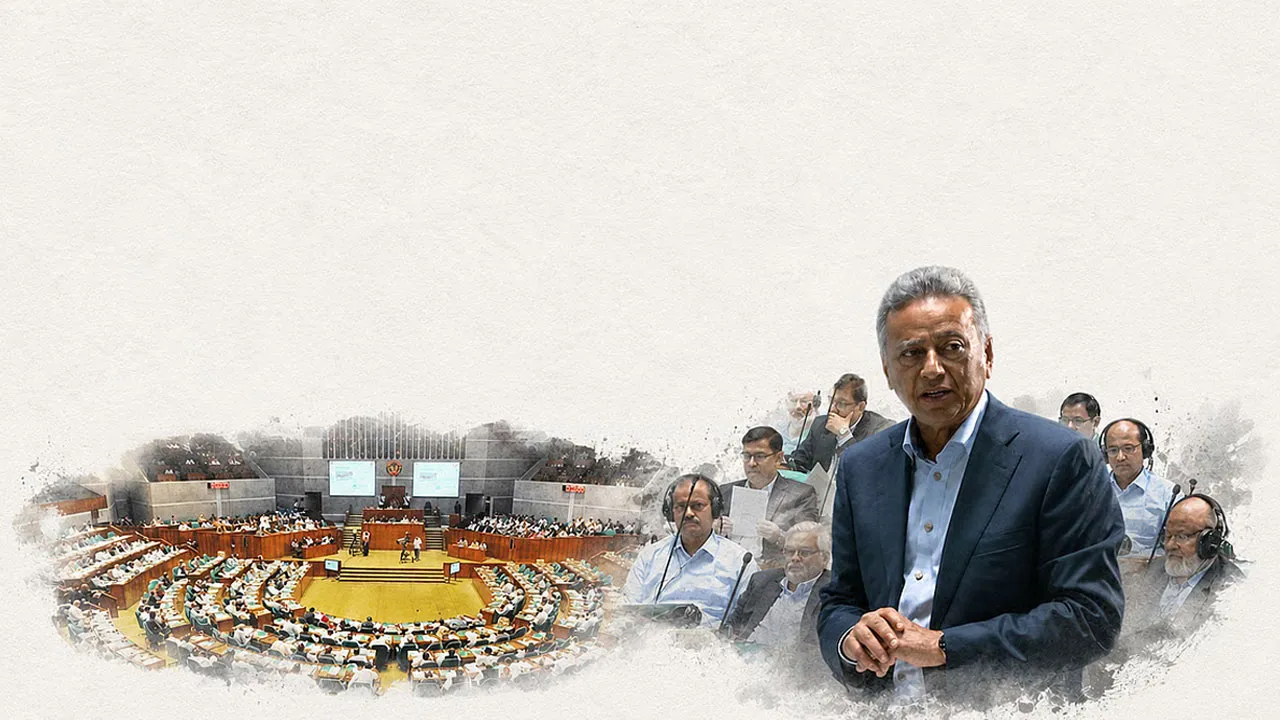
Bangladesh's parliament on Monday passed the Finance Bill 2026 with 64 amendments, raising the tax-free income threshold for individual taxpayers, withdrawing a controversial investment disclosure provision, and revising several tax measures included in the national budget.
Finance Minister Amir Khosru Mahmud Chowdhury introduced the bill, which was approved by a voice vote after lawmakers rejected a proposal to send it for public review.
The amendments followed Prime Minister Tarique Rahman's request during his budget speech to revise several provisions in the FY2026–27 budget.
Higher Tax-Free Income Threshold
One of the bill's most significant changes is a gradual increase in the income tax-free threshold for individual taxpayers over the next five fiscal years.
Under the approved schedule:
| Fiscal Year | Tax-Free Income Threshold |
|---|---|
| FY2026–27 | Tk 400,000 |
| FY2027–28 | Tk 400,000 |
| FY2028–29 | Tk 450,000 |
| FY2029–30 | Tk 450,000 |
| FY2030–31 | Tk 500,000 |
The original budget had proposed lower tax-free thresholds during the same period.
The government also withdrew a proposal that would have allowed taxpayers to disclose investments without being questioned about the source of their funds.
The proposal had sparked widespread criticism after many viewed it as a mechanism for legitimizing undisclosed wealth.
Finance Minister Chowdhury said the provision had been designed to address practical issues related to land transactions, where properties are often registered at official mouza values rather than market prices. According to the minister, the measure was intended to protect taxpayers from future legal disputes over declared asset values.
However, the government decided to withdraw the proposal following public concerns.
Under the approved amendments:
Reducing the income tax rate for private universities from 10% to 5%.
The proposal was rejected.
Presenting the bill, Finance Minister Chowdhury said it was necessary to implement the government's fiscal proposals and amend relevant legislation. Speaker Hafiz Uddin Ahmad then put the bill to a voice vote, and it was passed.