



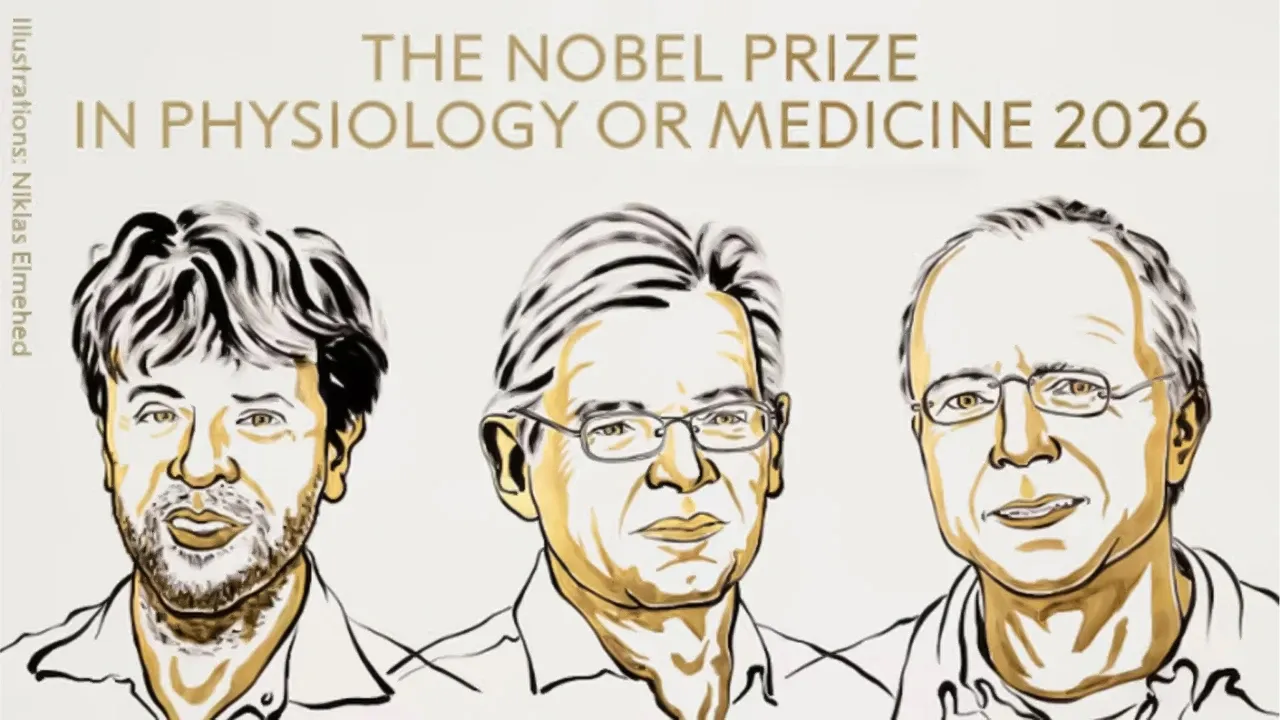
Karl Deisseroth of the United States and Peter Hegemann and Georg Nagel of Germany have been awarded the 2026 Nobel Prize in Physiology or Medicine for discoveries that have advanced the understanding and control of nerve-cell activity in the brain.
The Nobel Assembly at Karolinska Institutet announced the award in Stockholm on Monday, October 5.
According to the Nobel Committee, the three scientists were recognised for their discoveries concerning light-controlled ion channels and optogenetics.
Optogenetics is a technique that uses light to activate or deactivate specific nerve cells in a living brain. The method has become an important tool in neuroscience, allowing researchers to study the functions and connections of individual groups of neurons.
According to the Nobel Committee, laboratories around the world now use optogenetics to investigate the workings of the brain and explore its still-unresolved mysteries.
The award recognises research that has provided scientists with a way to manipulate specific neural activity with high precision, contributing to a deeper understanding of how the brain functions.

