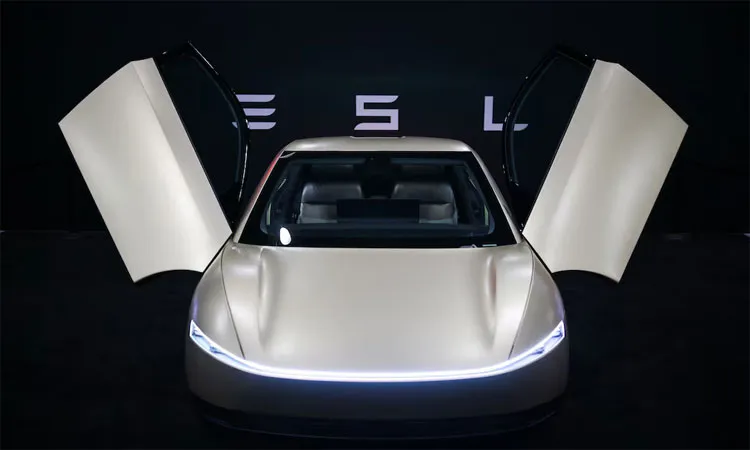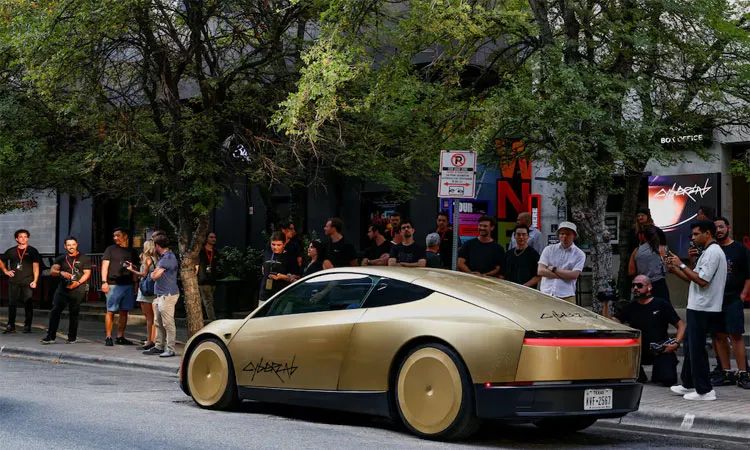
Tesla has launched limited public rides for its "Cybercab" a two-seater robotaxi with no steering wheel or pedals in Austin, Texas. The bold deployment has immediately drawn scrutiny from US auto safety regulators.
The gold-colored vehicle is central to CEO Elon Musk’s vision of transforming Tesla into a dominant driverless ride-hailing network. Although an exclusive launch event on Thursday drew excited investors and fans, Musk himself was absent. Currently the rides are restricted to specific Austin neighborhoods and accessible via Tesla's app with the company promising an affordable and dynamic pricing model.

However the Cybercab's radical design faces significant regulatory hurdles. The US National Highway Traffic Safety Administration (NHTSA) confirmed it is "evaluating the situation" as federal safety norms typically mandate manual human controls. Strict federal caps on deploying vehicles without steering wheels also pose a major barrier to Tesla's mass-production goals.
Beyond regulations, Tesla must overcome operational realities and fierce competition. While the company promotes the Cybercab as a transportation revolution, its previous robotaxi pilots using autonomous Model Y SUVs were plagued by long wait times and inaccurate drop-offs. Meanwhile, rival Waymo remains the clear US market leader with operating nearly a thousand autonomous vehicles in Texas more than double Tesla’s current fleet.
As Tesla navigates these legal and logistical roadblocks the Austin rollout marks a critical test of whether fully unsupervised autonomous vehicles can safely and reliably serve the public.