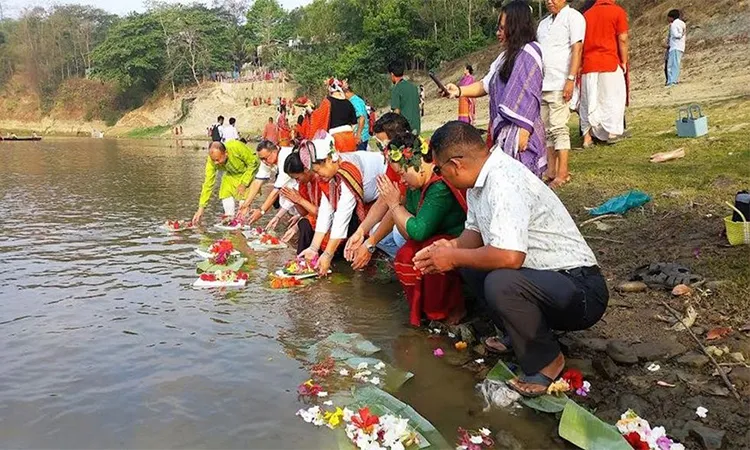
Today marks the 30th of Chaitra, observed as Chaitra Sankranti—the final day of the Bengali calendar year. Across Bangladesh, people are bidding farewell to the old year while preparing to welcome a new one with hopes of prosperity, renewal, and wellbeing.
The day carries deep cultural and spiritual significance. It symbolizes leaving behind past hardships and embracing a brighter future. Many observe the occasion through traditional rituals, charity, and community celebrations.
In astrological belief, Sankranti refers to the sun’s transition from one zodiac sign to another. On this day, the sun moves into Aries, marking the beginning of a new cycle. Some believe this period is auspicious for charitable acts, fasting, and spiritual practices.
People from different religious and cultural backgrounds mark the day in their own ways. In rural areas, fairs and folk festivals are common. Traditional activities include preparing for Halkhata (opening new business accounts), folk music, dance, processions, and local games.
A key attraction of Chaitra Sankranti is the Charak festival. Devotees take part in processions and rituals, often moving between village temples dedicated to Lord Shiva.
The Bangladesh Shilpakala Academy has organized a five-day cultural programme and Baishakhi fair in collaboration with the Ministry of Culture. The begins today at 3 pm at the academy’s open stage. The opening day features orchestral performances, traditional dances such as Dhamail, jarigan, folk songs, recitations, and performances by ethnic communities. A folk art exhibition will also open at the National Art Gallery.
The federation will host a Chaitra Sankranti and New Year celebration starting at 5 pm at the National Theatre auditorium. The programme includes a procession, dance, folk music, and a performance by renowned singer Sabina Yasmin. Senior theatre artists will also be honoured at the event.
The group will celebrate its anniversary with a special evening event titled “Pala-Mela: Dui Juger Golpokotha.” The programme will feature excerpts from popular , music, local food, and discussions, highlighting the group’s creative journey.
In addition to these in Dhaka, similar celebrations are taking place across the country, reflecting the rich cultural heritage of Bangladesh.