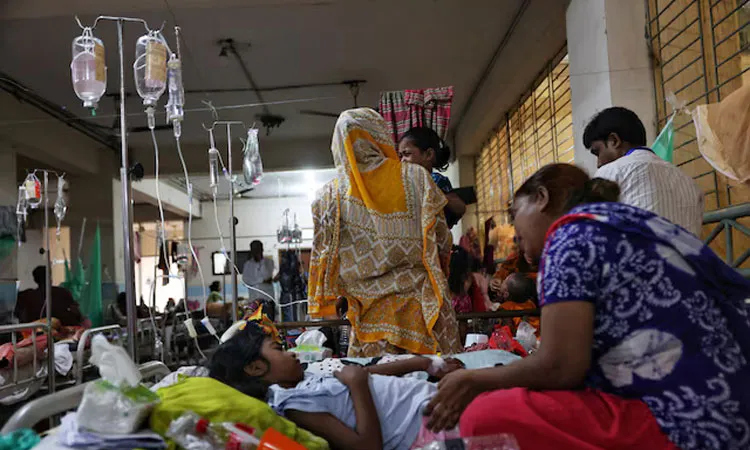
Bangladesh recorded its highest monthly dengue death toll of 2026 in October with public health experts warning that the ongoing outbreak is unlikely to subside significantly before December.
Health Ministry data reveals that the vector-borne disease has claimed 418 lives and caused over 133,000 hospitalizations this year as of October 30. October alone recorded 173 fatalities, surpassing September’s 148 deaths to become the deadliest month of the year.
Medical professionals report a concerning rise in patients arriving at hospitals only after developing critical complications. At Dhaka's Shaheed Suhrawardy Medical College and Hospital, Director Mirza Golam Sarwar noted that 279 dengue patients were currently under treatment following 67 fresh admissions in a single day. He stated that many patients are arriving in dengue shock syndrome, exhibiting dangerously low blood pressure and dropping oxygen levels.
Prominent medicine specialist Dr. ABM Abdullah warned that repeat infections and delayed medical care are primary drivers of severe illness and mortality. With all four dengue virus serotypes currently circulating in Bangladesh, individuals infected with a secondary strain face a significantly heightened risk of life-threatening complications. Although health authorities are reviewing potential dengue vaccines as a long-term preventive measure, no vaccine has been introduced to date.
Entomologist Kabirul Bashar of Jahangirnagar University explained that while the rapid surge in deaths may taper off, mosquito transmission will persist through November. Changing weather patterns, shifting rainfall and prolonged humidity exacerbated by climate change have extended the breeding cycles of Aedes mosquitoes. Consequently, stagnant water from earlier rains continues to foster larvae also delaying any major reduction in transmission until cooler, drier conditions arrive in December.
Public health officials urge citizens to eliminate stagnant water sources around homes and seek immediate medical evaluation at the onset of fever.