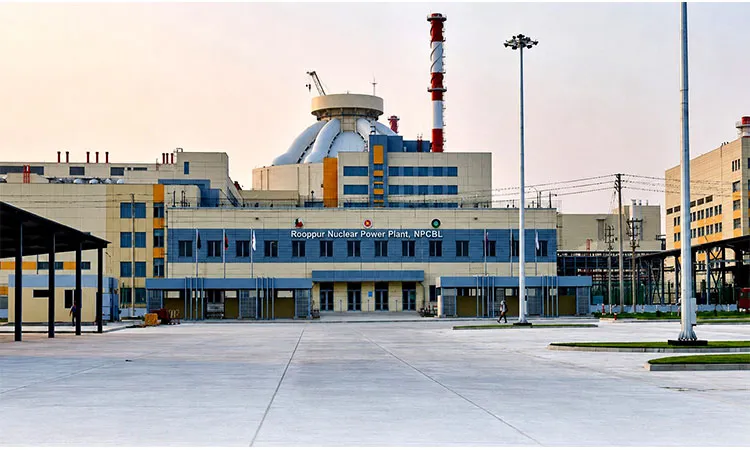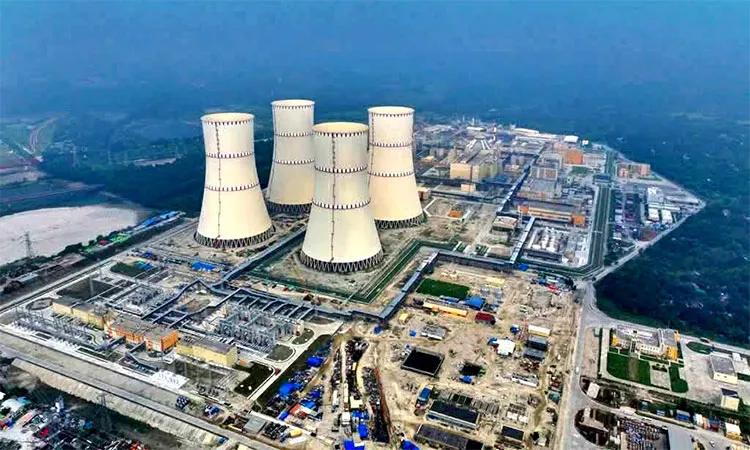
Bangladesh's maiden nuclear power plant in Pabna's Ishwardi has crossed a major hurdle. Regulators have approved safety valve test results for the first unit with clearing the path toward nuclear fission and potential trial electricity supplies to the national grid as early as next month.
The plant features two units each with a 1,200 MW capacity. Once fully operational 2,400 MW facility aims to diversify the national energy mix, reduce reliance on fossil fuels and meet roughly 10 percent of the country's electricity demand.
Project officials noted that while nuclear fission was initially eyed for September, technical flaws found during safety checks caused brief delays. Following successful high-pressure testing, the Bangladesh Atomic Energy Regulatory Authority (BAERA) gave its green light last Thursday also confirming that control valves, fire safety and radiation safeguards meet required standards.
The next critical milestone is "first criticality" establishing a self-sustaining chain reaction. This phase involves a month of observation before reactor power increases. Initially the plant will inject about 300 MW into the grid on a trial basis prior to commercial operations.
Built with Russian technical assistance using third-generation VVER-1200 reactors, Rooppur is designed for a 60-year lifespan. Ministry of Science and Technology officials emphasize that the project extends beyond electricity generation with serving as a catalyst for advanced technological capabilities the industrial growth and economic progress.