
- National
- Bangladesh
- Business
- International
- Sports
- Entertainment
- Politics
- Technology
- Life Style
- Religion
- Opinion
- FIFA World Cup 2026
Monday, 06 July 2026

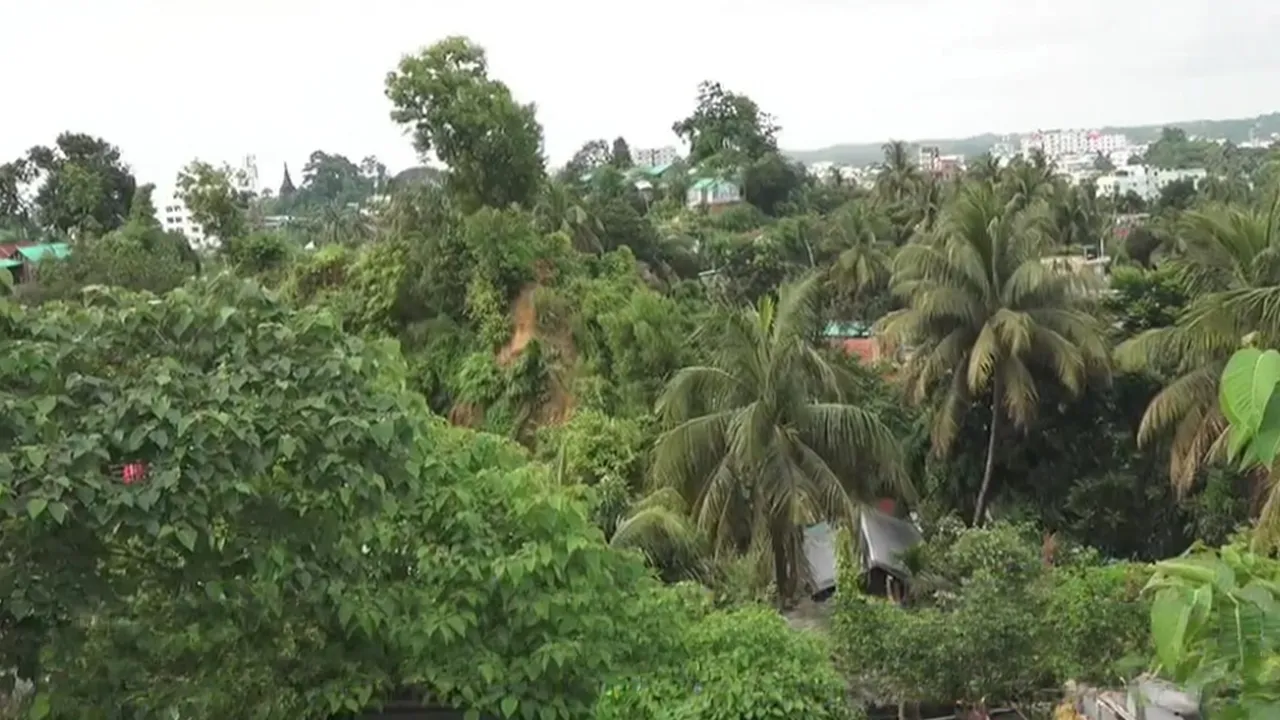
Cox’s Bazar, home to the world’s longest natural sandy beach, is facing a severe environmental and humanitarian crisis. Indiscriminate hill cutting, illegal encroachment, and unchecked environmental destruction have turned the district's hills into severe hazards. With the arrival of the monsoon, heavy rains bring the immediate threat of devastating landslides for lakhs of residents living on vulnerable slopes.
The danger is real and immediate. On June 4, two construction workers were buried alive during illegal hill cutting in the Daryanagar area. According to government and non-governmental environmental organizations, between 2.5 and 5 lakh people across the district are currently living under imminent threat of landslides. While local authorities routinely issue eviction warnings during heavy downpours, critics argue these seasonal warnings fail to address the root causes or offer sustainable safety.
Experts emphasize that the crisis is entirely man-made, driven by powerful land grabbers, political influencers, and local syndicates. For years, hills have been razed to construct unstable semi-concrete buildings and shanties. During prolonged rains, the sandy hillside soil absorbs water, loses stability, and collapses under gravity, burying the settlements below.
The weather outlook offers no relief. Md. Abdul Hannan, Assistant Meteorologist at the Cox’s Bazar Meteorological Department, warned that an active monsoon will bring persistent, moderate-to-heavy rainfall throughout the month, significantly elevating the risk of landslides.
Regulatory bodies claim they are pushing back against violators. Zamir Uddin, Director (Additional Duty) of the Cox’s Bazar Environment Department, stated that hill cutting is a severe, punishable offense under the Environment Protection Act. "We are executing a zero-tolerance policy, conducting regular drives, filing criminal cases, and issuing fines against those destroying the hills," he said.
However, civil society organizers point out systemic failures. Karimullah, a local leader of the Bangladesh Poribesh Andolon (BAPA), noted that clearing trees has completely destroyed the soil's natural binding capacity. He stressed that the crisis cannot be resolved without permanently resettling landless families on flat terrain and strictly prosecuting the hill-cutting syndicates.
The scale of encroachment is staggering. Forest Department sources reveal that roughly 9,657 hectares (nearly 24,000 acres) of hill forests in Cox’s Bazar have been illegally occupied by over 47,000 encroachers. This destruction spans across eight upazilas, including key urban zones like Ghonar Para, Pahartali, and Kalatali, where influential groups deploy excavators under the cover of night. Furthermore, extensive hill clearing across the 33 Rohingya camps in Ukhia and Teknaf has left the surrounding terrain barren and highly unstable.
For vulnerable residents, the decision to stay is driven by poverty. "I work as a daily wage laborer and cannot afford rent in the city. I know I am living here at the risk of death," said Abdus Salam, a resident of the Lighthouse hill area. Another resident, Sultan Mahmud from Daryanagar, shared that he bought a tiny hillside plot a decade ago for lack of affordable alternatives. "Every time it rains, we live in terror. If the government provided safe shelters, we would leave instantly."
Law enforcement and administrative heads have promised tighter controls. Cox’s Bazar Police Superintendent A. N. M. Sajedur Rahman affirmed that protecting lives is the state's highest priority. "We are conducting joint operations with the district administration and will arrest anyone attempting to set up new illegal settlements on the hills," he warned.
Cox’s Bazar Deputy Commissioner Mohammad Abdul Mannan acknowledged the gravity of the situation. "Protecting these vulnerable lives is our biggest immediate challenge. The government is currently formulating a comprehensive, long-term master plan to ensure the permanent protection of the hills and the sustainable rehabilitation of this massive population."
