- National
- Bangladesh
- Business
- International
- Sports
- Entertainment
- Politics
- Technology
- Life Style
- Religion
- Opinion
- FIFA World Cup 2026
Friday, 05 June 2026

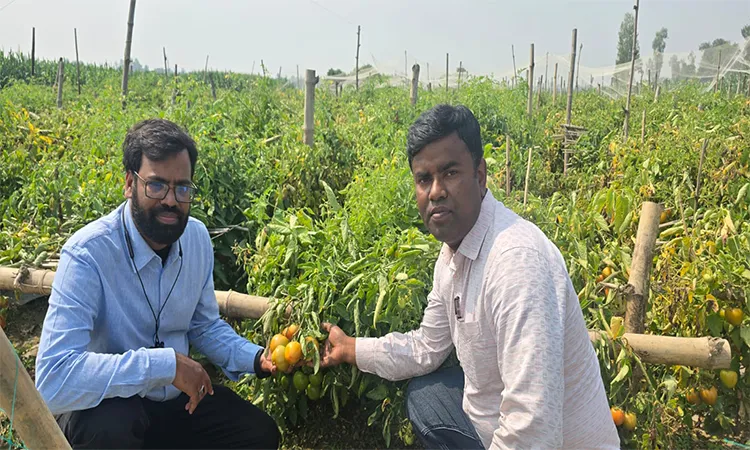
At a time when excessive chemical use is a major concern in agriculture, farmers in Pabna are finding success by growing safer vegetables using the mulching paper method.
Supported by the Jagrani Chakra Foundation (JCF) and the Palli Karma-Sahayak Foundation (PKSF), the initiative aims to eradicate unemployment and build financial independence among villagers through modern agricultural training and technical assistance.
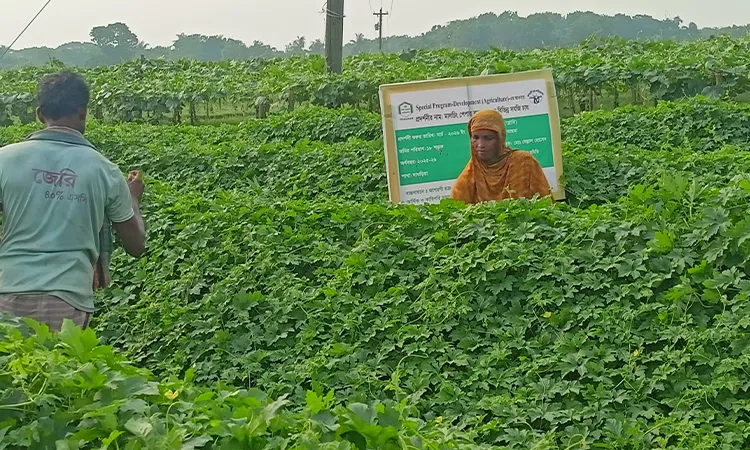
Across 15 demonstration plots in the Sadar, Atgharia, and Ishwardi upazilas, farmers are receiving hands-on training to grow bitter gourd, tomatoes, eggplant, squash, and bottle gourd. The mulching method requires significantly less fertilizer, pesticide, and labor, while actively suppressing weeds. By lowering production costs and boosting crop yields, the technique has proven highly profitable for local farmers.
In Athailshimul village of Ishwardi, farmers like the Asma-Belal couple are already seeing impressive results. Cultivating the 'Glory' variety of bitter gourd on 20 decimals of land, they invested only Tk 10,000 to Tk 15,000. Within just two weeks, they sold Tk 20,000 worth of produce and expect their total sales to reach Tk 70,000 to Tk 80,000 this season.
"I am already benefiting financially after taking the training from JCF, and I plan to expand my cultivation in the future," said farmer Belal Hossain.
This visible success has sparked interest among neighbors. Locals Mizanur Rahman, Taju Pramanik, Azizol Mallick, and Ayez Uddin say they had never seen this technique before but are now eager to adopt it for their own fields.
Agriculturist Abdul Majid Samrat, JCF’s agricultural officer in Pabna, explained that while mulching is widely used in countries like China, Japan, and the US, it is relatively new to Bangladesh.
"This method lowers farming costs, increases profit, and protects soil fertility," Samrat said. "Our ultimate goal is to make our farmers financially secure while meeting the country's demand for safe vegetables."
Local farmers are optimistic that JCF will continue to provide the necessary guidance and training to help them achieve long-term self-reliance.