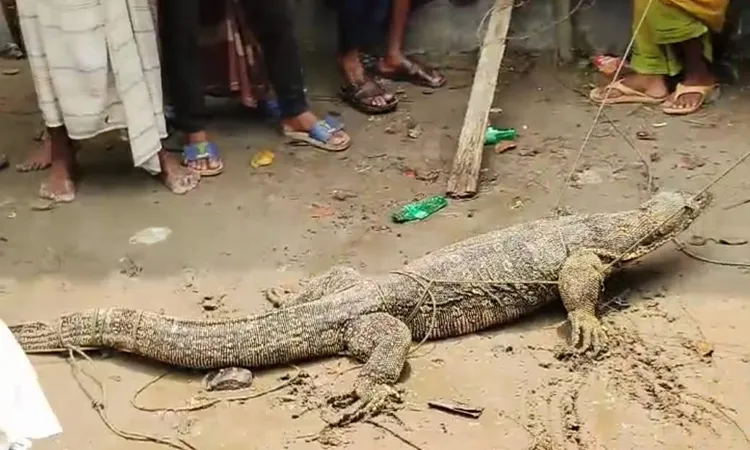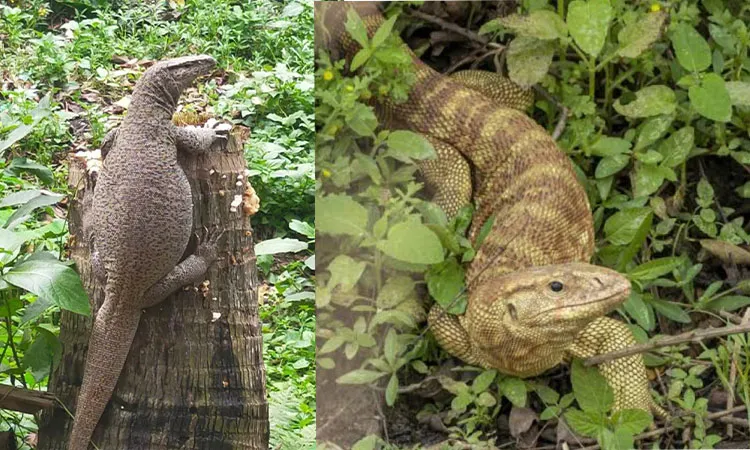
Monitor lizards once a common sight in Narail's canals, wetlands and thickets are gradually disappearing from the district's landscape. Locally known as "Gui Shap" "Sona Guishap" or "Kalo Gui Shap" the reptile scientifically named Varanus salvator is a skilled swimmer and climber also comfortable in both water and on land.
The species is now under threat from habitat destruction the filling of water bodies, clearing of thickets, indiscriminate hunting and widespread misconceptions among locals. It is still occasionally spotted in rural parts of Narail Sadar, Kalia and Lohagara Upazilas though many mistake it for a gharial rather than recognizing it as a monitor lizard.
Non-venomous and generally harmless the animal tends to avoid humans and flee at the first sign of danger. However, fear and myths about it being dangerous often lead villagers to kill it on sight when spotted near homes or ponds.
Experts stress that monitor lizards play a crucial ecological role, feeding on rats, snakes, frogs and decaying carcasses, effectively acting as nature's "silent cleaner." Lohagara Upazila Livestock Officer Dr. Shyamal Krishna Roy noted that the species helps control rodents and harmful insects while preserving ecological balance.
Environmentalists say the lizard's habitat has shrunk drastically over recent decades due to filled wetlands, reduced thickets and expanding construction. This has significantly limited its roaming grounds in Narail Sadar, Lohagara and Kalia.
Historically the species also faced hunting pressure for its skin also driven by both local and international demand. Though legal protections now exist, illegal hunting and trafficking risks remain.
Journalist and rights activist Kazi Hafizur Rahman who has worked on biodiversity conservation in the district, urged the public not to panic when encountering the reptile and instead let it move away safely. He called for collective efforts to protect wetlands, canals and thickets and to end wildlife hunting to preserve the species for future generations.