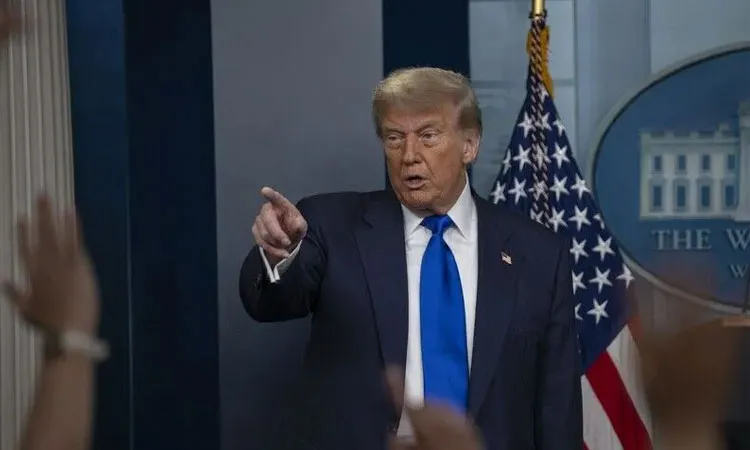
US President Donald Trump has vowed to destroy an Iranian bridge or power plant for every future attack on commercial shipping in the Strait of Hormuz, sharply escalating a conflict that is severely disrupting global energy markets.
In a post on Truth Social on Wednesday, Trump stated the US would target civilian infrastructure within the capital city of Tehran if Iran fires on vessels using missiles, drones, or any other weapons.
The threat prompted a swift response from Iran’s top negotiator, Mohammad Bagher Ghalibaf. He warned on X that if Tehran is prevented from exporting its oil, no regional infrastructure will be safe. "The equation of this war is clear: either all or none" Ghalibaf wrote, insisting the Strait of Hormuz will not return to pre-war conditions.
The escalating rhetoric coincides with a new maritime crisis. Iranian-allied Houthis in Yemen have threatened to block Saudi oil exports through the Bab el-Mandeb Strait. On Wednesday, the threat forced at least five international oil tankers with vessels bound for China and India to reroute away from the Red Sea. The near-total blockade of these critical waterways has pushed Brent crude oil prices past $95 a barrel and raised US gasoline prices above $4 a gallon.
The ongoing war erupted in February and continues to spiral despite a Pakistani-brokered peace framework signed in June. Both sides have increasingly targeted civilian infrastructure. While the US conducted fresh overnight strikes on Tehran, Iran has retaliated by attacking desalination and energy plants in neighboring Gulf countries and launching missiles toward Jordan.
Adding to the tensions, Trump recently threatened to strike the Kolang Kouh or "Pickaxe Mountain" area near Iran's Natanz nuclear facility. Iranian Foreign Ministry spokesman Esmaeil Baqaei dismissed US claims of a secret nuclear complex as a "fabricated pretext for aggression" accusing Washington of violating international law and harboring enmity toward Iran’s scientific progress.
United Nations Secretary-General Antonio Guterres has strongly condemned the mutual targeting of civilian facilities and declaring such actions "unacceptable" under international law.