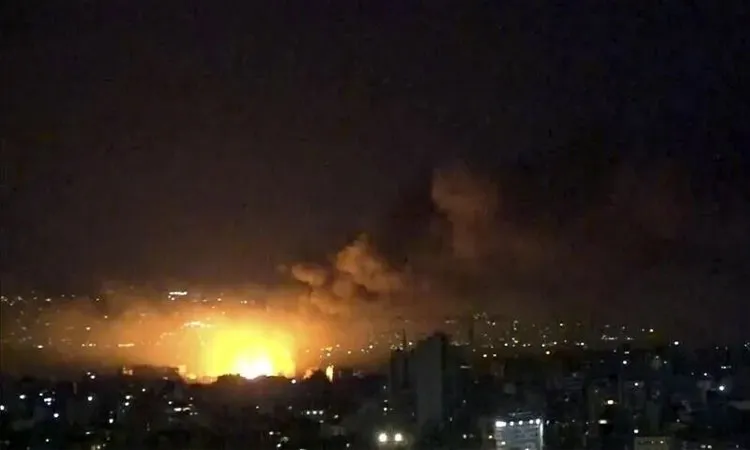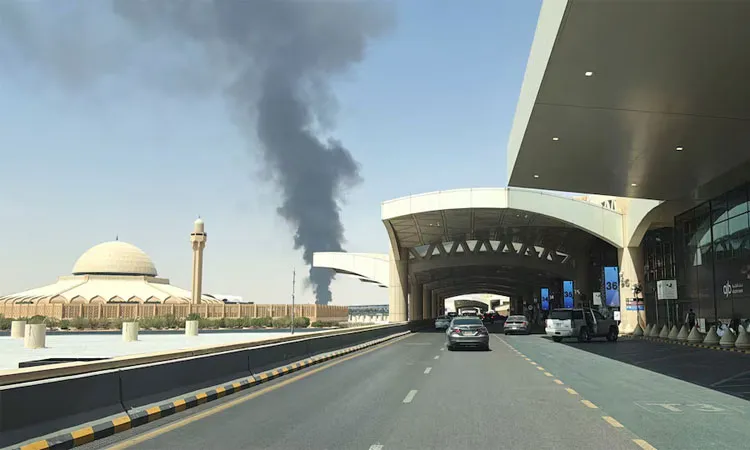
Yemen's Houthi rebels launched missile and drone strikes on "sensitive" sites in the Saudi capital Riyadh on early Saturday. Following the attacks a massive plume of black smoke and flames were seen near Riyadh's main airport.
The Houthis claimed the strikes were retaliation for a Saudi attack on Yemen’s capital, Sanaa. They also targeted a key Saudi Aramco oil export facility in the Red Sea city of Yanbu. In response the Saudi-led military coalition confirmed it intercepted a Houthi missile over Riyadh and thwarted additional attacks targeting civilians in the cities of Bish, Farasan, Taif and Yanbu.
This escalation marks the first reported Houthi strike on Riyadh since tensions surged in July. The fighting has opened a new front in a broader regional conflict with putting vital alternative Red Sea routes and global oil supplies at risk while the Strait of Hormuz remains blocked.
In light of the attacks US State Department issued a security alert also urging Americans in the Middle East to exercise "heightened vigilance" and advising others to reconsider travel to the region.
Regional and global leaders are responding to the crisis. Turkey offered technical military support to Saudi Arabia under a new trilateral defense pact that includes Pakistan. Meanwhile the Iranian official Mohsen Rezaei stated that Tehran wants the Houthi-Saudi war to end and has sent conditions to mediators for re-engaging in stalled negotiations with the United States.
The UN Security Council strongly condemned the Houthi military escalation also highlighting the grave threat the attacks pose to civilians and vital energy infrastructure.