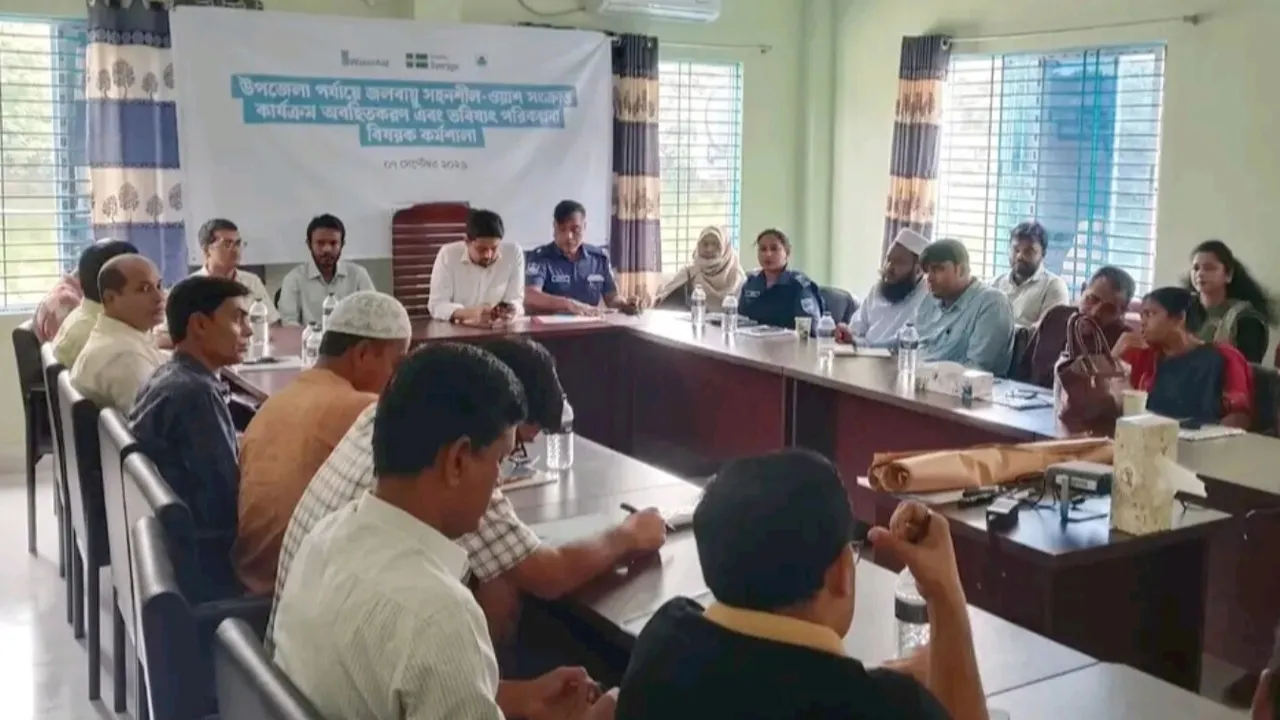
A workshop on climate-resilient water, sanitation and hygiene (WASH) systems and planning was held at the upazila level in Paikgachha of Khulna on Monday.
The workshop was organised at the Municipal Water Branch Office in the afternoon with support from WaterAid Bangladesh and by the non-governmental development organisation Nabolok Parishad.
Upazila Nirbahi Officer and Paikgachha Municipality Administrator Wasiuzzaman Chowdhury chaired the workshop.
Among the special guests were Upazila Health and Family Planning Officer Dr Ahsanara Binte Ahmed, Senior Upazila Fisheries Officer Saikat Mallick, Agriculture Officer Agriculturist Ekramul Hossain, Livestock Officer Dr Partha Pratim Roy, Officer-in-Charge Sheikh Aual Kabir, WaterAid Bangladesh Assistant Director (HR) Fahmida Sultana, Upazila Secondary Education Officer Roksana Parvin, Women Affairs Officer Moniruzzaman, Family Planning Officer Abdullah Al Mamun, Youth Development Officer Qutbuddin, Municipal Executive Officer Lalu Sardar and Assistant Education Officer Sanjay Debnath.
Academic Supervisor Mir Nure Alam Siddiqui, police ASI Shahnaz Akter, Municipal Chief Assistant Ziaur Rahman, Sub-Assistant Engineer Lincoln Ali, Mrinal Kanti Sana and Uttam Kumar Ghosh were also present.
WaterAid Bangladesh Policy and Advocacy Lead Faiyaz Uddin Ahmed, Capacity Development Expert Sumon Kumar Saha, WASH for Urban Poor Project Manager Omar Faruk Jewel, Kazi Farhana Afroze and Mukta Biswas, along with officials from WaterAid Bangladesh and Nabolok Parishad, government departments, the municipality, NGOs and the media, attended the programme.
Speakers at the workshop said climate change is placing traditional water and sanitation infrastructure under severe pressure due to drought, salinity and sudden flooding.
They stressed that climate-resilient WASH systems are no longer a luxury but an urgent necessity for survival. Appropriate technologies and integrated planning at the local level are essential to ensure safe drinking water and hygienic sanitation for marginalised communities, they said.
The speakers also emphasised that WASH systems must be made climate-resilient to ensure long-term stability following disasters, alongside immediate relief efforts.
The workshop highlighted the need to bring policymakers, local administration and development partners under a common framework to formulate an effective, practical and implementable action plan for sustainable and timely climate-resilient WASH management.