



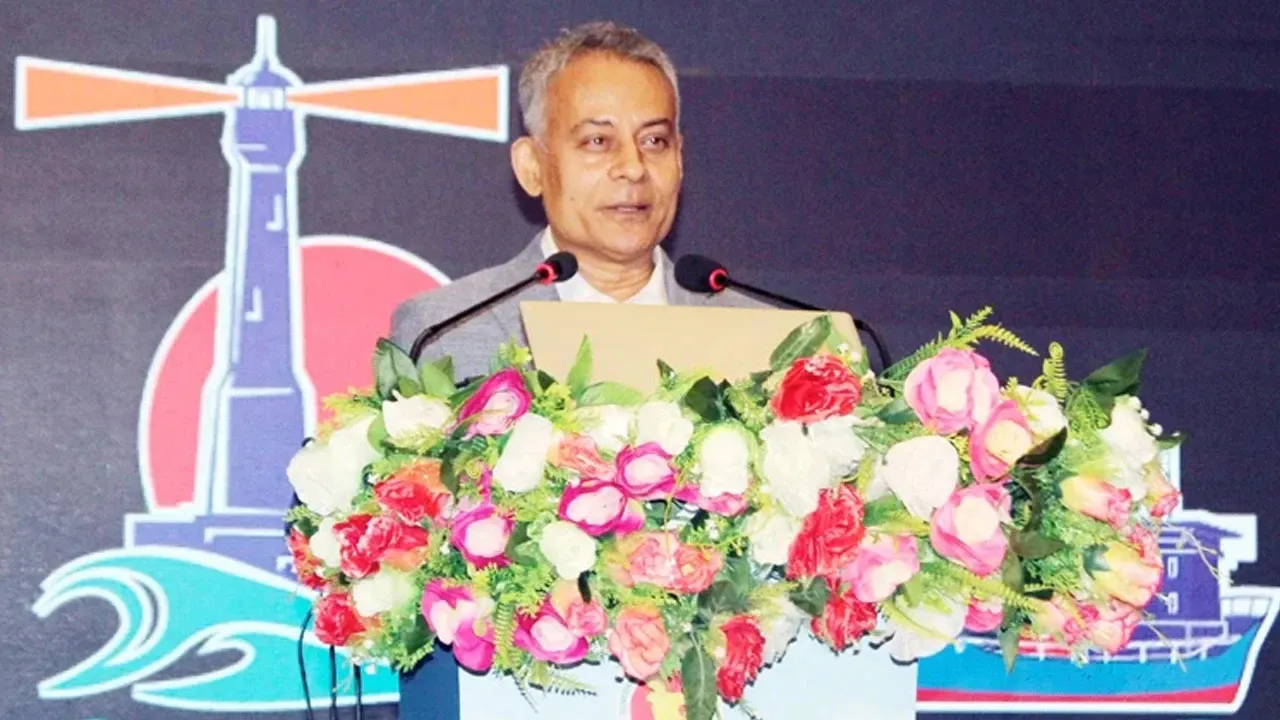
Bangladesh is developing a national port strategy to serve the country’s broader interests, support economic progress and expand international trade, Shipping Minister Sheikh Rabiul Alam has said.
A major share of Bangladesh’s imports, exports and economic activities depends on the management of seaports, river ports and land ports. Coordinated management, greater efficiency and an effective strategy are therefore essential, he said.
The minister made the remarks as the chief guest at a seminar organised by the Ministry of Shipping at a hotel in the capital on Sunday, October 11.
Shipping State Minister Rajib Ahsan, Japan International Cooperation Agency (JICA) Country Director in Bangladesh Takahashi, chairmen of the Chattogram Port Authority and other port authorities, representatives of relevant ministries and government agencies, university teachers and experts attended the seminar.
Sheikh Rabiul Alam said the national port strategy must not undermine the authority or responsibilities of any particular agency or ministry. Instead, the country’s broader economic interests should take priority, with input from all relevant ministries, port authorities, government agencies, businesses, importers, exporters and experts.
He said Bangladesh should have developed an integrated port management strategy much earlier. As the economy and trade expand, it has become increasingly important to increase port capacity, improve operational systems and strengthen coordination among the relevant authorities. The government is now moving towards finalising the long-needed national strategy, he added.
The minister said JICA and relevant experts were assisting the initiative. The Japanese government agency, which has long supported Bangladesh’s development infrastructure and other sectors, is also contributing to the formulation of the port strategy. He expressed hope that the experience and views of local and international experts would help produce an effective policy document.
He stressed that the country’s broader interests must remain the top priority throughout the process. Institutional authority, responsibilities or positions should not obstruct coordinated efforts, he said. However, this does not mean disregarding the legal duties or operational scope of any authority. Rather, cooperation must be strengthened within the existing responsibilities and institutional frameworks.
Bangladesh’s seaports, river ports and land ports are operated by separate authorities. Their activities involve not only the Ministry of Shipping but also the Ministry of Commerce, the National Board of Revenue (NBR), customs authorities and various public and private organisations engaged in imports and exports. The minister said the views of all these stakeholders must therefore be considered in preparing the national strategy.
Sheikh Rabiul Alam cautioned that giving exclusive priority to the interests of any one party could prevent the strategy from achieving its intended objectives. An integrated framework must account for the responsibilities, needs and interests of all institutions and stakeholders involved in port management. Experts, he said, should offer practical recommendations based on Bangladesh’s economic realities, future trade prospects and international experience.
He also highlighted opportunities to draw on international investment and expertise to improve port management. Initiatives are already under way to involve international companies in container handling and terminal management at different ports in Bangladesh. To make these efforts more effective, a balance must be maintained among port operations, investment, commercial activity and national interests.
Referring to international port operators, the minister said Bangladesh was expanding its engagement with leading global container terminal companies.
He mentioned DP World, Denmark’s A.P. Moller and Singapore’s PSA, saying international experience could help improve the efficiency of the country’s ports. However, he stressed that coordinated policies and long-term planning would be necessary to realise the benefits of such initiatives.
Improved port efficiency would not only facilitate imports and exports but also have a positive impact on the wider economy, he said. It could help accelerate port-related transport, logistics, business and entrepreneurial activities. The needs and interests of entrepreneurs, businesses, importers and exporters must therefore be properly reflected in the national port strategy. The minister said port development should not be limited to infrastructure construction. Coordination must also improve across terminal operations, container handling, cargo clearance, transport links, customs procedures and related services. At the same time, international service standards and a business-friendly environment must be ensured for port users, making Bangladesh’s ports more competitive and better equipped to serve international trade.
Sheikh Rabiul Alam reiterated that the national port strategy was not solely the responsibility of one ministry or a particular authority. It was vital to harness the country’s economic potential and expand trade, making it necessary for all stakeholders to work together beyond personal, institutional or narrow interests.
He thanked the local and international experts, relevant ministries, port authorities and JICA representatives participating in the initiative. He also urged everyone involved to make the best possible use of their knowledge, experience and expertise in developing the strategy. Expressing optimism, the minister said a practical and integrated national port strategy could be developed through collective efforts. He said it would play an important role in improving port management, expanding international trade and advancing Bangladesh’s national economy.
