Oil prices bounced back in the global market on Friday (August 14) as escalating military tensions surrounding Iran renewed concerns over crude oil supply, following U.S. threats of an indefinite naval blockade.
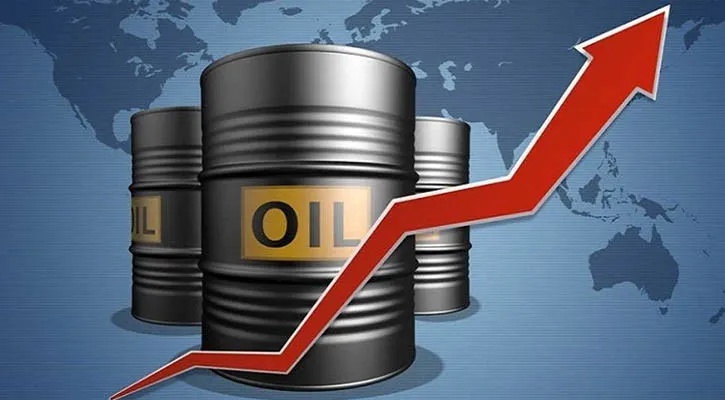
According to a report by news agency Reuters, Brent crude rose by 9 cents, or 0.1%, to $87.16 a barrel by 01:30 GMT on Friday. Meanwhile, U.S. West Texas Intermediate (WTI) crude gained 4 cents to reach $81.29 a barrel.
The uptick follows a drop of over 2% on Thursday, triggered by fears of weakening global oil demand. That decline had snapped a multi-day rally, ending six consecutive sessions of gains for Brent and five for WTI. Despite the brief dip, both benchmarks remain on track for a weekly gain of nearly 4%.
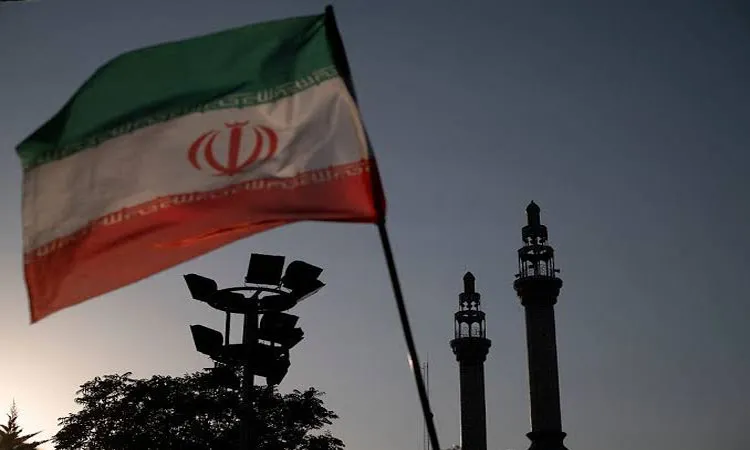
Tensions escalated after Hossein Taeb, head of Iran’s paramilitary Basij, asserted that the Strait of Hormuz remains under the "management and control of the Islamic Republic," according to Iran's semi-official Fars news agency. His comments came after U.S. President Donald Trump claimed the U.S. held "complete control" over the crucial waterway.
Any prolonged conflict or disruption to shipping through the Strait of Hormuz could severely impact global oil supplies. Further driving up price concerns, U.S. Defense Secretary Pete Hegseth stated that the U.S. Navy is prepared to rotate vessels to maintain the blockade for as long as necessary.
However, price gains are being capped by forecasts of weakening demand. Both OPEC and the International Energy Agency (IEA) recently downgraded their projections for global oil demand growth.
Additionally, U.S. crude inventories saw their largest weekly surge in over three and a half years. Commercial crude stocks in the U.S. jumped by 17.4 million barrels last week to 424.4 million barrels the biggest weekly gain since January 2023.
Tim Waterer, chief market analyst at KCM, noted that two opposing forces are currently acting on the oil market: supply concerns providing a floor for prices, while weak demand forecasts prevent significant upward momentum.
Adding to the instability, two vessels belonging to the state-owned Abu Dhabi National Oil Company (ADNOC) were attacked Thursday evening while transiting the Strait of Hormuz, according to the UAE's state news agency WAM.
The UAE government blamed Iran for the attack. No casualties were reported, and ADNOC stated that the situation was brought under control.
Reuters reported a sharp decline in ship traffic through the Strait of Hormuz amid the ongoing conflict. Prior to the escalation, nearly one-fifth of the world’s oil supply passed through this strategic maritime route.
Overall, military friction surrounding Iran, threats of an ongoing U.S. blockade, and attacks on commercial shipping in the Strait of Hormuz continue to generate uncertainty over global supplies, even as sluggish demand and rising U.S. stockpiles temper further price surges.