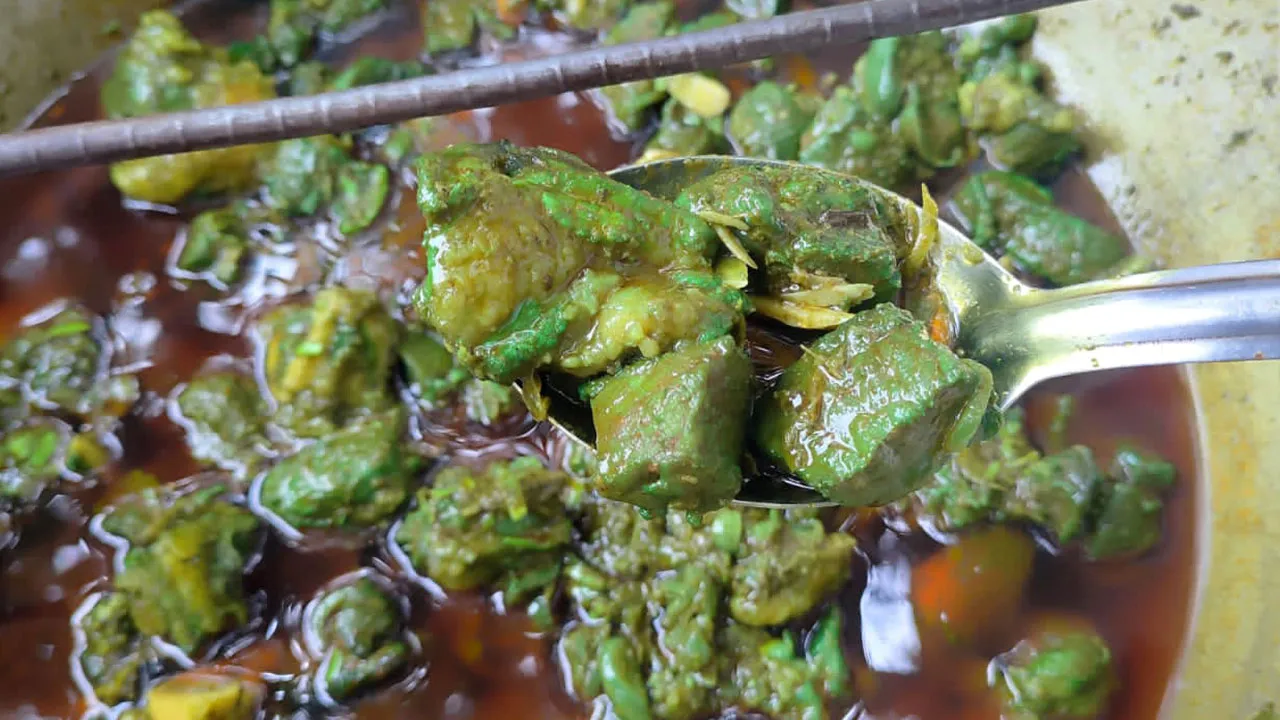
The mystery surrounding beef that reportedly turned bright green after cooking in Paikgachha, Khulna, has finally been resolved.
Laboratory tests conducted by the Bangladesh Food Safety Authority (BFSA) found no evidence of harmful bacteria, formalin, spoilage, or artificial chemicals in the meat. Instead, the unusual green coloration was caused by a rare chemical change in the meat’s natural pigment due to prolonged refrigeration followed by exposure to high cooking temperatures.
The incident occurred on July 22 at a bakery in Paikgachha municipality. Employees of Modern Bakery purchased nearly 4 kilograms of beef for Tk 2,750 from butcher Ismail Gazi at Paikgachha municipal market.
The meat was being prepared for a picnic involving around 14–15 bakery employees. According to those present, shortly after the meat was added to the pan following the preparation of the spices, the pieces suddenly turned a deep green color.
Interestingly, the color of the spices and gravy remained normal.
The unusual incident quickly spread across social media, triggering widespread concern and speculation that the meat might have been stale or contaminated with formalin.
Following the incident, allegations were exchanged between the bakery employees and the butcher.
The bakery employees suspected that the butcher had sold spoiled or formalin-treated meat. The butcher, however, claimed that the employees might have accidentally introduced a chemical substance into the meat.
Considering the public concern, Paikgachha Upazila Nirbahi Officer (UNO) Wasiuzzaman Chowdhury ordered an investigation.
Police and Upazila Sanitary Inspector Uday Mondal subsequently collected and seized samples of both the cooked meat and raw meat stored in the seller’s refrigerator.
The samples were sent to the laboratory of the Bangladesh Food Safety Authority for detailed analysis.
The BFSA laboratory report, signed by food analyst Nazia Sultana on August 27, provided the scientific explanation for the unusual color change.
According to the report, the samples contained no harmful bacteria or pigment-producing Pseudomonas bacteria. The meat also showed no signs of spoilage, such as an abnormal odor or sticky texture.
The tests further found no evidence that formalin or any external artificial chemical had caused the meat to change color.
According to the spectrophotometric analysis, the green coloration was linked to a chemical transformation of myoglobin, the natural heme pigment found in meat.
The meat had reportedly been stored in a refrigerator for an extended period. Subsequent exposure to high temperatures during cooking caused structural or chemical changes in the pigment, resulting in the unusual green appearance.
Experts consider such a reaction to be rare, but it can occur under particular storage and cooking conditions.
Paikgachha Upazila Sanitary Inspector Uday Mondal said the laboratory report has clarified the actual scientific cause behind the incident.
He said the findings also dispel the speculation that formalin or harmful chemicals were responsible for the color change.
The scientific explanation is expected to ease concerns among local residents and bring an end to the allegations and counter-allegations between the meat seller and the bakery employees.
The incident highlights the importance of proper meat storage, food safety testing and scientific investigation before drawing conclusions about suspected food contamination.